 HBWEB GAME PORTAL
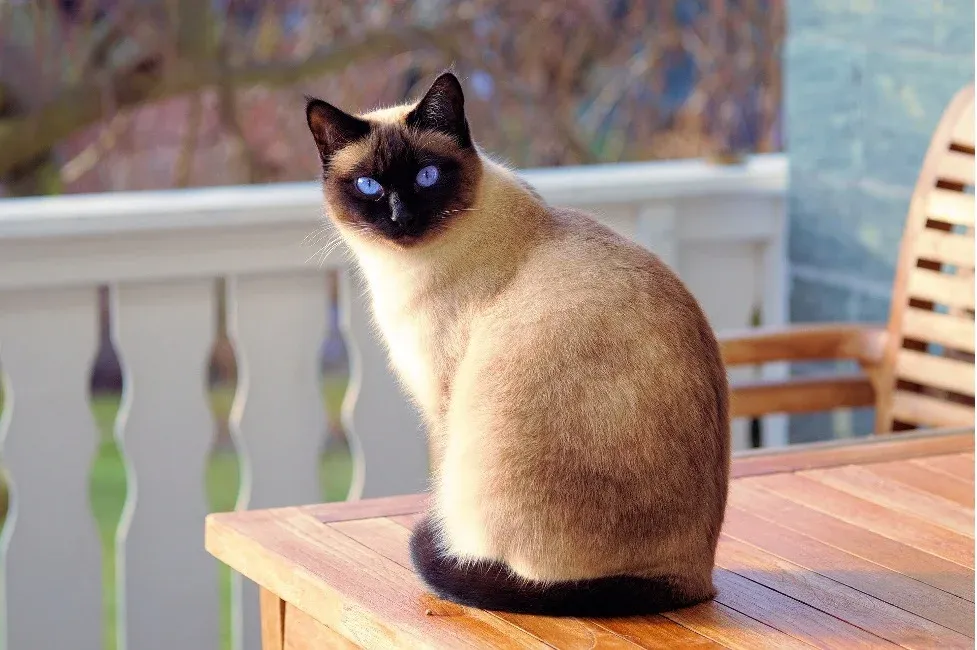
You call your cat's name.
Nothing.
You call again, slightly louder.
Still nothing.
You try the full name, the nickname, the ridiculous baby voice you swore you'd never use, and finally the sacred phrase: “Do you want some treats?”
Suddenly, two ears rotate like satellite dishes. A furry head appears from behind the sofa. Your cat is awake, alert, and apparently fluent in English after all.
So, does your cat actually know its name? Or has it spent years perfecting the art of ignoring you while pretending to be an innocent little angel?
Good news: Science says your cat probably does recognize its name. Bad news: Recognition doesn't come with a promise to respond. Welcome to life with a tiny roommate who understands more than it lets on.
1. Yes, Your Cat Probably Knows Its Name
For years, cat owners have argued that their pets understand their names. Researchers eventually decided to investigate instead of simply asking a cat and getting ignored.
In 2019, a research team led by Atsuko Saito published a study in Scientific Reports examining whether domestic cats could distinguish their own names from other words.
The researchers played cats recordings of several words, including ordinary nouns and, in some experiments, the names of other cats living in the same household. Then came the important moment: the cat's own name.
The results suggested that cats living in ordinary households could distinguish their names from other words. They could even recognize their names when unfamiliar people said them.
In other words, your cat doesn't necessarily need to see your face, smell the treats in your hand, or witness you performing an interpretive dance in the kitchen. It may recognize the sound of its name alone.
So the next time your cat looks directly at you after you call its name, then slowly turns away, remember: it may not be confused. It may simply have other plans.
Very important plans, apparently. Such as staring at a wall.
2. But Recognizing Its Name Doesn't Mean It Understands Everything

Before you start telling your cat all your secrets, let's manage expectations.
Recognizing a name isn't the same as understanding human language the way humans do. Your cat may learn that a particular sound refers to it without understanding the complicated meaning behind every sentence you say.
Think of its name as a familiar sound associated with certain experiences.
Maybe hearing it means dinner is coming. Maybe it means someone is about to open the door. Perhaps it means you're about to pick it up for a cuddle it did not authorize.
Over time, your cat can learn to connect that sound with what usually happens next.
This is why cats may respond differently depending on the situation. Call their names while they're relaxing, and you might get a lazy ear twitch. Say the same name while opening a packet of treats, and suddenly they appear with the speed of an Olympic sprinter.
The name hasn't changed. The context has.
Your cat may not understand every word in “Would you please stop sitting on my laptop? I have actual work to do.”
But it has probably learned that the laptop is warm, your attention is elsewhere, and sitting directly in the middle of everything produces excellent results.
Honestly, that's a pretty effective system.
3. Why Does Your Cat Ignore You When You Call?
Ah, the million-dollar question.
If cats can recognize their names, why do they sometimes behave as if their human has just made an extremely boring noise?
There are several possible explanations.
Reason No. 1: Your Cat Simply Isn't Interested
Imagine someone calling your name while you're comfortably lying on the sofa, watching your favorite show.
You hear them. You understand they're talking to you. But unless they mention pizza, money, or something genuinely interesting, you might not feel the need to respond immediately.
Your cat may be doing something similar.
If it's comfortable, sleepy, or deeply invested in watching a dust particle travel across the floor, responding to your voice might not be worth the effort.
After all, lifting your head requires energy. Turning your entire body around requires even more. And walking over to you? That's practically a full afternoon's commitment.
Your cat has priorities.
Reason No. 2: You Have Called Its Name Approximately 847 Times
Some cats hear their names constantly.
“Luna, come here!”
“Luna, get off the table!”
“Luna, stop eating that!”
“Luna, why are you sitting in the sink?”
“Luna, I swear, if you knock that glass over…”
Eventually, the name becomes part of the household soundtrack.
If the sound frequently leads to nothing particularly interesting—or regularly predicts something unpleasant—your cat may become less responsive to it.
This doesn't necessarily mean it has forgotten its name. It may simply have learned that not every announcement requires action.
In fairness, humans also develop impressive selective hearing when someone repeats the same instruction for the tenth time.
Reason No. 3: Your Cat Is Busy
Cats have their own little schedules, even if those schedules appear to consist of sleeping, eating, grooming, and looking vaguely disappointed in the furniture.
Your cat might be watching a bird outside, investigating a suspicious bag, grooming one paw with the intensity of a professional athlete, or preparing to attack a toy mouse that has been dead for three years.
A distracted cat may not respond noticeably when you call.
And sometimes, a cat's reaction is so subtle that you miss it entirely. One ear might turn toward you. Its head might move a fraction of an inch. Its eyes might briefly shift in your direction.
Meanwhile, you're standing there expecting a grand entrance worthy of a movie star.
Sorry, human. The budget only covers one ear twitch.
4. Your Cat May Recognize Your Voice, Too
Here's another interesting detail: recognizing a name and recognizing a person's voice are not exactly the same ability.
In a 2013 study, researchers from the University of Tokyo investigated whether cats could distinguish their owners' voices from the voices of strangers.
The cats often responded by orienting toward the sound—moving their ears or heads, for example. More obvious social responses, such as vocalizing or moving their tails, were less common.
The findings suggested that cats could distinguish their owners' voices, even when they didn't respond in an enthusiastic, immediately recognizable way.
So your cat may know not only its name but also the sound of the person saying it.
That could help explain why your cat reacts differently when you speak compared with when a stranger does.
Of course, individual cats vary. Some are naturally more responsive, while others seem to have signed a lifelong contract requiring them to act mildly inconvenienced by everyone.
And no, your cat doesn't have to sprint toward you every time it hears your voice to prove that it recognizes you.
Sometimes, love looks like an ear twitch from across the room.
Sometimes, it looks like absolutely nothing.
Cats keep their customer service standards mysterious.
5. The Treat Test: Can You Prove Your Cat Knows Its Name?
Want to see whether your cat recognizes its name? You can try a simple, gentle observation at home.
The goal isn't to force your cat to obey. It's simply to notice whether it reacts differently to its name than to other ordinary sounds.
Here's how to approach it.
Step 1: Choose a quiet moment.
Wait until your cat is awake, relaxed, and not intensely focused on something else. Testing its attention while it's chasing a toy or investigating dinner is unlikely to tell you much.
Step 2: Say its name naturally.
Use your usual voice and say the name once. Avoid shouting, repeating it endlessly, or turning the experiment into a dramatic courtroom scene.
Step 3: Watch for small reactions.
Your cat might turn an ear, move its head, glance toward you, or briefly pause what it's doing. It doesn't need to come running like a dog in a commercial.
Step 4: Keep expectations realistic.
One reaction—or a lack of reaction—doesn't prove anything by itself. Cats can be distracted, tired, or simply uninterested. If you want to compare responses, use ordinary words in a calm, similar tone and observe whether the reactions seem different.
And please don't spend the next three hours conducting a scientific investigation while your cat files a complaint with the Department of Unwanted Attention.
The point is to observe, not to demand a performance.
6. Can Cats Learn Nicknames, Too?
Now we arrive at a problem familiar to anyone who has ever owned a cat.
You gave your cat a perfectly respectable name: Oliver.
Then, somehow, Oliver became Ollie.
Ollie became Mr. Floof.
Mr. Floof became Fluffy Butt.
And by the end of the year, you're calling him “Sir Pounce-a-Lot, Duke of the Laundry Basket, Destroyer of Houseplants.”
Does he know which one is his actual name?
Possibly more than one.
Cats can learn associations with familiar sounds, and a nickname used consistently in meaningful situations may become familiar to them too. The important thing is not whether the name appears on a veterinary record. It's whether the cat has learned to associate that sound with itself or with what tends to happen next.
That doesn't mean every ridiculous nickname automatically becomes part of your cat's vocabulary.
If you call your cat 37 different things in one afternoon, you might simply be providing a very confusing audio experience.
Still, if your cat consistently reacts to several nicknames, it may have learned those sounds as well.
Congratulations. Your cat is multilingual, but only when it feels like it.
7. Does Your Cat Know Its Name but Pretend Not to Hear You?
Let's be honest: this is the question everyone really wants answered.
The scientific evidence supports the idea that cats can recognize their names. Researchers have also found evidence that they can distinguish familiar human voices.
But science cannot tell us that every unresponsive cat is deliberately being rude.
A cat's lack of response could reflect its level of attention, motivation, environment, or individual temperament. We shouldn't automatically interpret it as a conscious decision to annoy its owner.
Still, the timing can be suspicious.
You call your cat: nothing.
You shake the treat container: instant teleportation.
You say, “I'm going to trim your claws”: suddenly your cat has vanished into another dimension.
You whisper, “Who's a good kitty?” and two eyes appear from under the bed.
Is your cat intentionally ignoring you? We can't know from those reactions alone.
But we can say that cats are excellent at learning which sounds predict something worth investigating.
And if your cat has learned that “treats” means snacks but “come here” means the end of a peaceful nap, its priorities are not difficult to understand.
From your cat's perspective, this may not be disobedience.
It may simply be excellent decision-making.