 HBWEB GAME PORTAL
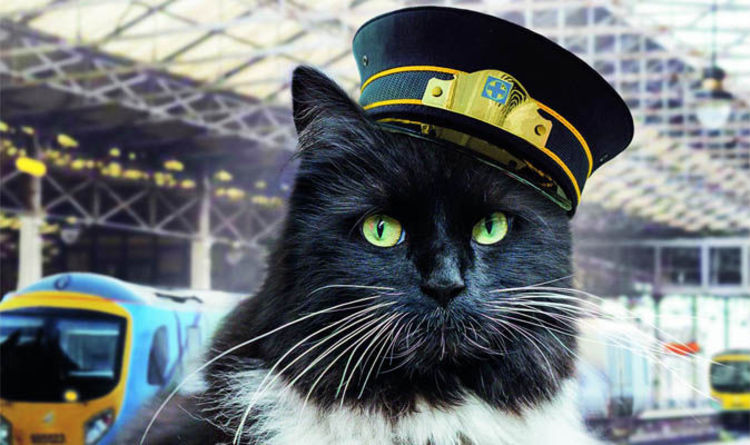
We like to think of cats as professional sleepers.
They nap for 16 hours, stare at walls for no obvious reason, knock things off tables, and occasionally sprint through the house like they have just received an urgent government assignment.
But believe it or not, cats have had real jobs throughout history.
And the funniest part?
Humans actually hired them.
Cats didn't fill out applications. They didn't prepare resumes. They didn't sit through interviews.
They simply showed up, looked adorable, and somehow got promoted.
Here are some of the strangest jobs cats have ever had.
1. Ship's Cat: Professional Sailor and Rat Hunter
Long before cats were sleeping on heated blankets, they were spending their days on ships.
Sailors commonly kept cats aboard vessels because cats could control rats and mice that might damage food supplies, ropes, cargo, and other equipment.
This made the humble ship's cat surprisingly useful.
While humans were busy navigating storms and crossing oceans, the cat had one important responsibility:
Find the mouse.
And then, presumably, take a 14-hour break.
Ship cats could also become beloved members of the crew. Some traveled enormous distances and became unofficial mascots of the vessels they lived on.
Imagine being a sailor and discovering that the ship's cat has a better travel history than you do.
You: “I've crossed three oceans.”
Cat: “I've crossed four. Feed me.”
2. Warehouse Cat: Security Guard With Fur
Before modern pest control, warehouses, shops, farms, and food stores had a serious problem:
Rodents.
And where there were rodents, there were cats.
Cats became natural pest controllers in places where food was stored. Farms, markets, mills, warehouses, and shops could all benefit from having a resident mouser.
The job description was remarkably simple:
Keep the mice away.
No security uniform.
No night-vision cameras.
No complicated software.
Just one cat sitting in a dark corner waiting for something to move.
Of course, cats also have a habit of sleeping during working hours.
So perhaps their official title should have been:
Night Shift Security Supervisor.
3. Brewery Cat: Protecting the Beer
Here's a job title that sounds ridiculous until you learn why it existed.
Cats have historically been associated with breweries because breweries could attract mice and rats, particularly around grain and other food materials.
In the United Kingdom, brewery cats became particularly famous.
One of the best-known modern examples was Towser, a cat who lived at the Glenturret Distillery in Scotland.
Towser became famous for her long career catching mice around the distillery.
She was even recognized by Guinness World Records for her reported mouse-catching record.
Think about that for a moment.
Some cats get a cardboard box.
Towser got a world record.
Meanwhile, your cat probably gets excited because you opened a new bag of treats.
4. Railway Cat: Station Employee
Cats have also found employment around railway stations.
Why?
Because railway stations have food, storage areas, passengers, and—historically—plenty of opportunities for rodents.
One famous example is Felix, a cat associated with Huddersfield railway station in England.
Felix arrived at the station as a kitten and eventually became something much bigger than a mouser.
She received an official high-visibility uniform and became a local celebrity.
Her job was officially connected with pest control, but her real duties eventually expanded into something much more important:
Being adorable for commuters.
Felix even received promotions.
Yes, you read that correctly.
A cat got promoted.
And humans say cats don't have careers.
5. Government Employee: The Cat Who Worked for the Treasury
You might expect a government employee to have a desk, paperwork, and approximately 700 emails waiting every morning.
Not Larry.
Larry is a famous cat who lives at 10 Downing Street, the official residence and office of the British prime minister.
Larry's official title is Chief Mouser to the Cabinet Office.
His role is primarily associated with keeping the building free of rodents, although his public duties have become much more important.
He has become a familiar figure around Downing Street and a celebrity in his own right.
And unlike most government employees, Larry doesn't seem particularly interested in explaining his decisions.
He simply sits there.
Judges you.
Walks away.
Honestly, he's probably the most cat-like civil servant imaginable.
6. Library Cat: Protecting Books From Pests
Libraries might seem like the perfect workplace for a cat.
Quiet rooms.
Warm corners.
Lots of shelves.
And thousands of humans who are expected to whisper.
But historically, cats could also serve a practical purpose in places where books and manuscripts were stored.
Rodents could damage paper, parchment, bindings, and other materials.
A cat could help keep those unwanted visitors under control.
In modern times, library cats have become less about pest control and more about companionship and publicity.
Some have become local celebrities, attracting visitors who are far more interested in meeting the cat than checking out a book.
Which raises an important question:
Did people come to read?
Or did they come to pet the librarian?
The cat knows the answer.
7. Museum Cat: Living Exhibit With No Opening Hours
Museums aren't usually the first place you expect to find a working cat.
But some museums have had resident cats, particularly in places where cats helped control rodents.
One famous example is the Hermitage Museum in St. Petersburg, Russia, which has long been associated with cats living in and around the museum complex.
The cats have become part of the institution's history and public image.
Some visitors come for the art.
Others come for the cats.
And somewhere inside the building, a cat is probably sitting beneath a priceless artwork thinking:
“Nice painting. Mine now.”
8. Palace Cat: Living in Luxury While Doing Absolutely Nothing
Cats have lived in royal palaces for centuries, often because they were useful mousers and because people valued their presence.
But palace cats had one enormous advantage over ordinary working cats:
The accommodation was fantastic.
Imagine being a mouse hunter in a palace.
You have enormous rooms.
Warm fireplaces.
Fancy furniture.
Servants walking around.
And probably food that is considerably better than whatever your average barn cat receives.
Of course, from the cat's perspective, none of this was particularly unusual.
A palace?
Just a larger house.
Royal family?
Just some humans.
Gold furniture?
Excellent scratching opportunity.
9. Cat Postman: The Cat Who Delivered Mail
Now we're getting into truly strange territory.
In Belgium, a famous experiment in the 1870s reportedly involved sending cats from Liège to nearby villages with the idea that they could find their way home.
The experiment was connected with the idea of testing cats' homing abilities.
The cats were reportedly transported away from their home and released.
Unfortunately, this was not exactly the beginning of a successful feline postal service.
The cats did not become reliable mail carriers.
Which is perhaps the least surprising sentence in this entire article.
Imagine giving a cat an important letter and saying:
“Take this to the other side of town.”
The cat:
“Absolutely.”
Also the cat:
goes to sleep under a bush.
10. Office Cat: Employee Morale Specialist
Modern workplaces have discovered another important use for cats:
Making humans feel better about being at work.
Office cats have become increasingly popular in various workplaces, especially smaller companies and creative businesses.
Their official responsibilities might include:
- Greeting employees
- Sitting on keyboards
- Interrupting meetings
- Inspecting paperwork
- Walking across desks
- Demanding snacks
- Sleeping during working hours
In other words, they perform almost exactly the same duties as some human employees.
Except cats are usually more popular.
And unlike your coworker, the office cat can attend an entire meeting without saying a single word and still somehow become the most memorable person in the room.
11. Social Media Manager: Posting Without Knowing What Wi-Fi Is
Then came the internet.
And everything changed.
Cats no longer needed to catch mice to become famous.
They simply needed a camera.
Today, some cats have enormous social media followings, sponsored products, merchandise, books, and professional management teams.
The cat's contribution?
Looking cute.
Sometimes looking angry.
Occasionally sitting in a box.
Humans handle the photography, editing, posting, advertising, and business negotiations.
The cat handles the difficult part:
Existing.
Honestly, it's a brilliant career strategy.
12. Hotel Cat: The Employee Guests Actually Want to Meet
Some hotels have resident cats whose job is essentially to make guests feel welcome.
A hotel cat might greet visitors at reception, wander through the lobby, sleep on furniture, or simply become part of the hotel's personality.
For guests, this can be an unexpected bonus.
You book a hotel expecting a bed and breakfast.
Instead, you get a furry receptionist who refuses to answer questions.
“Excuse me, where is the restaurant?”
Cat stares.
“And what time does breakfast start?”
Cat slowly blinks.
“Do you speak English?”
Cat walks away.
Five stars.
13. Library Ambassador: The Cat Who Became the Main Attraction
Some cats have gone beyond being simple resident mousers and become unofficial ambassadors for their workplaces.
Take Dewey Readmore Books, the famous library cat from Spencer Public Library in Iowa.
Dewey was found abandoned in the library's book-return box as a kitten and eventually became a beloved resident.
He became internationally famous, attracting visitors and media attention.
His story was eventually turned into a bestselling book.
So technically, Dewey's career path looked something like this:
Abandoned kitten → library resident → celebrity → bestselling book star.
Meanwhile, millions of humans spend years trying to become successful authors.
Dewey just sat on some books.
Why Were Cats So Good at Getting Jobs?
The answer is actually pretty simple.
Cats are useful.
For thousands of years, humans have stored food, grain, crops, clothing, books, and other materials that attracted rodents.
Cats were naturally good at hunting small prey.
So humans and cats developed a mutually beneficial relationship.
Humans provided food and shelter.
Cats provided pest control.
Eventually, however, something interesting happened.
Humans became emotionally attached to their employees.
The working cat became the beloved cat.
The beloved cat became the mascot.
The mascot became a celebrity.
And suddenly, nobody cared whether the cat had caught a single mouse that month.