 HBWEB GAME PORTAL
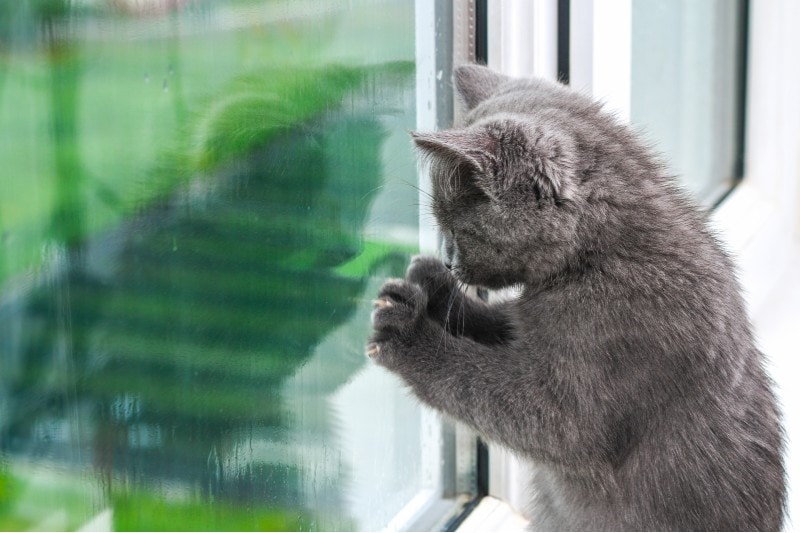
You leave the house.
Your cat watches you go.
No dramatic goodbye.
No “I’ll miss you, human.”
Just one slow blink before your cat turns around and walks away.
You spend the next eight hours wondering:
Does my cat actually miss me, or is it celebrating because I finally left?
The answer is a little more complicated—and much more interesting.
Cats may not miss their owners in exactly the same way humans miss each other, but many cats do form strong attachments to their people. They can notice when you are gone, recognize your routines, and show changes in behavior when their favorite human disappears for a while.
So yes, your cat may miss you.
It just probably won't write you a heartfelt message about it.
Unless it has learned how to use your phone.
First: Does Your Cat Know You’ve Left?
Absolutely.
Cats are surprisingly good at learning routines.
If you leave for work every morning at 8 a.m., your cat probably knows the entire sequence.
You get dressed.
You pick up your keys.
You put on your shoes.
You walk toward the door.
Your cat watches.
And somewhere inside its furry little head:
“Ah. The human is doing the leaving ritual again.”
Some cats even begin waiting near the door when they recognize the routine.
Others couldn't care less.
Or at least, they are very good at pretending they couldn't care less.
So… Does Your Cat Actually Miss You?
There is evidence that cats can form social bonds with their owners and may use their humans as a source of comfort and security.
That doesn't necessarily mean your cat spends the entire day sitting by the window dramatically staring into the distance.
That's more of a movie thing.
Cats are also independent animals. Many are perfectly capable of entertaining themselves, sleeping, exploring, eating, grooming, and finding a suspiciously expensive object to knock onto the floor while you're away.
But being independent doesn't mean being emotionally detached.
A cat can enjoy having its own space and still notice when you aren't around.
Think of it this way:
Your cat doesn't necessarily need you every second.
But it may still prefer having you around.
Especially when you are the person who provides food.
And warmth.
And the magical ability to open doors.
What Does a Cat Do When You're Gone?
This is where things get interesting.
Unfortunately, your cat probably doesn't spend eight hours sitting on the sofa staring at the front door waiting for you to return.
It has a schedule.
And that schedule may include a shocking amount of sleeping.
1. Your Cat Sleeps
A lot.
Cats are famous for sleeping for long periods, so your absence may simply create more uninterrupted nap time.
Your cat may curl up in your bed.
Your chair.
Your clothes.
Your freshly washed laundry.
Basically, anywhere that smells like you.
Which is both sweet and slightly insulting.
You spend hundreds of dollars making your cat a beautiful bed.
Your cat chooses your hoodie.
Classic.
2. Your Cat Patrols the House
Cats are naturally curious and territorial animals.
When you're away, your cat may wander around the house, inspect familiar spaces, look out windows, explore interesting smells, and generally make sure everything remains exactly where it should be.
Of course, “exactly where it should be” may include moving several objects onto the floor.
You return home:
“Why is this here?”
Your cat:
“Security inspection.”
3. Your Cat Looks Out the Window
Windows are basically free television for indoor cats.
Birds.
People.
Cars.
Leaves.
Other cats.
A mysterious plastic bag blowing down the street.
There is always something happening.
So if your cat spends part of the day watching the world outside, don't automatically assume it's waiting sadly for you.
It may simply be watching a pigeon commit suspicious activity.
4. Your Cat May Notice Your Absence More Than You Think
Some cats become more vocal or affectionate when their owners return.
They may greet you at the door.
Follow you around.
Rub against your legs.
Jump onto your lap.
Or suddenly become extremely interested in whatever you are doing.
And then there are the cats who look at you for approximately two seconds before walking away.
Don't take it personally.
That may simply be their version of:
“Good. You're back. Everything is under control.”
Why Does My Cat Ignore Me When I Come Home?
This is one of the great mysteries of cat ownership.
You have been gone all day.
You open the door.
You expect a reunion.
Your cat looks at you.
You:
“BABY! I MISSED YOU!”
Your cat:
walks away.
Excuse me?
But cats don't necessarily express affection through dramatic greetings.
Some prefer subtle forms of social interaction.
They may sit near you rather than on you.
Follow you from room to room.
Sleep beside you.
Slow-blink at you.
Or simply choose to be in the same room.
For a cat, proximity can be meaningful even when there is no enthusiastic welcome-home ceremony.
Basically:
Dogs may greet you like a returning war hero. Cats may greet you like an employee returning from lunch.
Both can be happy to see you.
They just have very different management styles.
What If Your Cat Suddenly Becomes Extra Affectionate?
If your cat becomes unusually clingy when you return, it may be seeking social interaction after being alone.
You might notice more:
- Following
- Meowing
- Rubbing against you
- Sitting on your lap
- Sleeping near you
- Head-butting
- Attention-seeking behavior
This doesn't automatically mean your cat spent the entire day suffering from loneliness.
It may simply mean:
“You're back. Excellent. Now entertain me.”
Or:
“You're back. Excellent. Dinner.”
With cats, you learn to appreciate the ambiguity.
Can Cats Have Separation Anxiety?
Yes, some cats can experience distress when separated from their owners or when their routine changes.
However, not every cat that follows you around or meows when you leave has separation anxiety.
More concerning signs can include significant changes in eating, toileting, grooming, vocalization, or destructive behavior when left alone.
If you notice sudden or severe behavior changes, it's worth discussing them with a veterinarian, because behavioral changes can also have medical causes.
And please don't assume that every mysterious puddle on the floor is your cat writing an emotional breakup letter.
Sometimes there's a medical or litter-box problem that needs attention.
How Long Can a Cat Remember Its Owner?
Cats have good memories, particularly for experiences, places, routines, and people associated with important experiences.
That's one reason a cat may recognize a familiar person's voice, smell, footsteps, or daily routine.
So if you've been away for a few hours, your cat isn't likely to suddenly think:
“Who is this strange human standing in my kitchen?”
It knows you.
Whether it chooses to acknowledge you is another matter.
Cats are perfectly capable of recognizing you and still behaving like you are mildly inconvenient.
Does Your Cat Miss You More Than It Shows?
Possibly.
One of the biggest mistakes humans make with cats is expecting them to behave like dogs.
Cats have their own social style.
A cat may not run to the door.
It may not wag its tail.
It may not make a huge fuss when you return.
Instead, it might quietly sit beside you.
Sleep near your feet.
Follow you into another room.
Bring you a toy.
Slow-blink at you.
Or simply relax more easily when you're home.
Those small behaviors can be easy to overlook because they're not dramatic.
But with cats, subtle often matters.
What About Cats That Seem Completely Independent?
Some cats genuinely enjoy spending more time alone.
Their personality, age, early experiences, environment, and relationship with humans can all influence how social they are.
An independent cat isn't necessarily an unhappy cat.
In fact, some cats seem to have perfected the art of enjoying their own company.
They sleep.
They explore.
They watch birds.
They groom themselves.
They eat.
They sleep again.
And occasionally they remember that you exist.
A peaceful little life.
Your cat may not need constant attention to feel secure.
That doesn't mean your bond isn't important.
And Then You Come Home…
After a long day, you finally open the door.
Your cat may appear from somewhere inside the house.
Maybe it meows.
Maybe it rubs against your legs.
Maybe it follows you around.
Maybe it sits three feet away and stares at you.
Maybe it doesn't even move.
But if your cat chooses to spend time with you after you've returned, that's worth noticing.
Because cats don't always express affection loudly.
Sometimes love looks like:
“I'm going to sit over here while you do your boring human things.”
Sometimes it looks like sleeping beside you.
Sometimes it looks like following you into the bathroom for absolutely no reason.
And sometimes it looks like your cat finally climbing onto your lap after ignoring you for six hours.
So, Does Your Cat Miss You?
Probably not in exactly the same way you miss your cat.
Your cat doesn't necessarily spend the entire day counting the minutes until you return.
But cats can form strong bonds with their owners, recognize familiar people and routines, and react to changes in their social environment.
So when you leave, your cat may notice.
And when you come home, your cat may be genuinely pleased to have you back—even if its greeting consists of one blink followed by a trip to the food bowl.