 HBWEB GAME PORTAL
Cats have a remarkable talent for turning absolutely anywhere into a place they can call home. A cardboard box? Perfect. An empty suitcase? Five-star accommodation. A tiny gap behind the refrigerator? Apparently, a luxury studio apartment.
But some cats have taken this talent to a whole new level. Around the world, felines have settled in ancient ruins, remote islands, historic buildings, busy train stations, and places where most humans would struggle to spend a comfortable afternoon.
Forget expensive cat beds and designer scratching posts. These cats have found homes in some of the strangest places on Earth—and honestly, some of them have better views than we do.
Let's meet a few of these unexpected residents.
1. Aoshima, Japan: The Island Where Cats Outnumber Humans
Imagine moving to a peaceful island where you can walk outside and immediately bump into a dozen cats. Sounds like a dream, right? Welcome to Aoshima, a small Japanese island that became internationally famous for its large population of cats.
Often nicknamed “Cat Island,” Aoshima originally had cats brought in to control mice on fishing boats and around local homes. Over time, the cat population grew, while the human population gradually declined. The result? A place where furry residents became far more noticeable than their two-legged neighbors.
The island isn't a luxury feline resort, however. It's a quiet fishing community with limited facilities, and visitors need to respect the residents and local environment. There aren't endless cafés, souvenir shops, or restaurants serving fancy cat-shaped desserts.
Instead, you might find cats wandering along narrow roads, relaxing beside old buildings, or inspecting visitors as if they're checking whether you have brought acceptable snacks.
The cats probably don't understand why tourists travel so far to photograph them. They simply live their lives, take naps, and occasionally wonder why humans are so obsessed with taking pictures of sleeping animals.
Honestly, same.
2. Tashirojima, Japan: Where Cats Have Their Own Shrine
Another Japanese island with a serious feline reputation is Tashirojima, located in Miyagi Prefecture.
Like Aoshima, Tashirojima has a long connection with fishing. Cats were traditionally valued because they helped control rodents and were believed to bring good fortune to fishermen. Over time, local affection for cats became part of the island's identity.
One of its most unusual features is a small cat shrine, often called Neko-jinja. According to local tradition, a cat was accidentally injured by a falling rock while fishermen were collecting stones. Feeling sorry for the animal, the fishermen created a shrine in its honor.
The story helped strengthen the island's special relationship with cats.
Tashirojima also has cat-themed architecture, including cat-shaped cabins designed for visitors. Imagine booking a holiday home that looks like a giant cat. Your accommodation finally matches your personality.
However, visitors should remember that the island is still a real community, not a giant petting zoo. Feeding rules and local guidance matter, and not every cat wants to become your new best friend.
Some cats are friendly. Others prefer to stare at you from a safe distance, silently judging your outfit.
In other words, it's just like meeting people.
4. Houtong, Taiwan: An Abandoned Mining Village Turned Cat Destination
Once known primarily for its coal-mining industry, Houtong in Taiwan became famous for a very different reason: cats.
As the mining industry declined, the village faced economic challenges and a shrinking population. Eventually, its feline residents began attracting attention from visitors, photographers, and cat lovers.
Today, Houtong is widely known as a cat village, with cat-themed signs, artwork, shops, and areas where visitors may encounter free-roaming cats.
The village's transformation is an interesting example of how a community can develop a new identity around its animal residents.
Instead of visiting solely for industrial history, tourists arrive hoping to photograph cats lounging beside walkways, exploring corners, or watching the world from elevated platforms.
The cats, naturally, have no idea they're contributing to local tourism.
They aren't preparing for photographs, practicing their poses, or checking visitor reviews. They're simply doing what cats do best: sitting somewhere convenient and looking vaguely disappointed in everyone.
Still, tourism can bring challenges. More visitors mean more noise, possible feeding problems, and greater responsibility for animal welfare.
The best way to enjoy Houtong is to follow local rules, avoid disturbing resting animals, and remember that the cats live there year-round. Your holiday might last two days, but their lives continue long after you board the train home.
5. Castles and Palaces: Royal Buildings, Unimpressed Residents
Castles were built to defend territories, palaces were designed to display wealth, and historic estates were created to impress visitors.
Cats, naturally, see all of this as a collection of excellent sleeping locations.
Historic buildings can provide quiet corners, sheltered courtyards, sunny windowsills, and plenty of places to explore. In the past, cats were also useful for controlling rodents in buildings where food was stored.
That helps explain why cats have been associated with palaces, monasteries, castles, and other old buildings in different parts of the world.
Consider the Forbidden City in Beijing, once the imperial palace of Chinese emperors. Cats have become familiar figures in stories and photographs associated with the historic complex, where they are often admired by visitors.
In other historic sites, cats may live around courtyards, gardens, or nearby streets rather than inside the protected buildings themselves.
The important distinction is that not every cat seen near a palace is an official resident. Some are community cats, some belong to nearby households, and others simply happen to be passing through.
But imagine a cat strolling across a centuries-old courtyard.
The architecture is magnificent. The history is extraordinary. The visitor is speechless.
The cat is thinking about lunch.
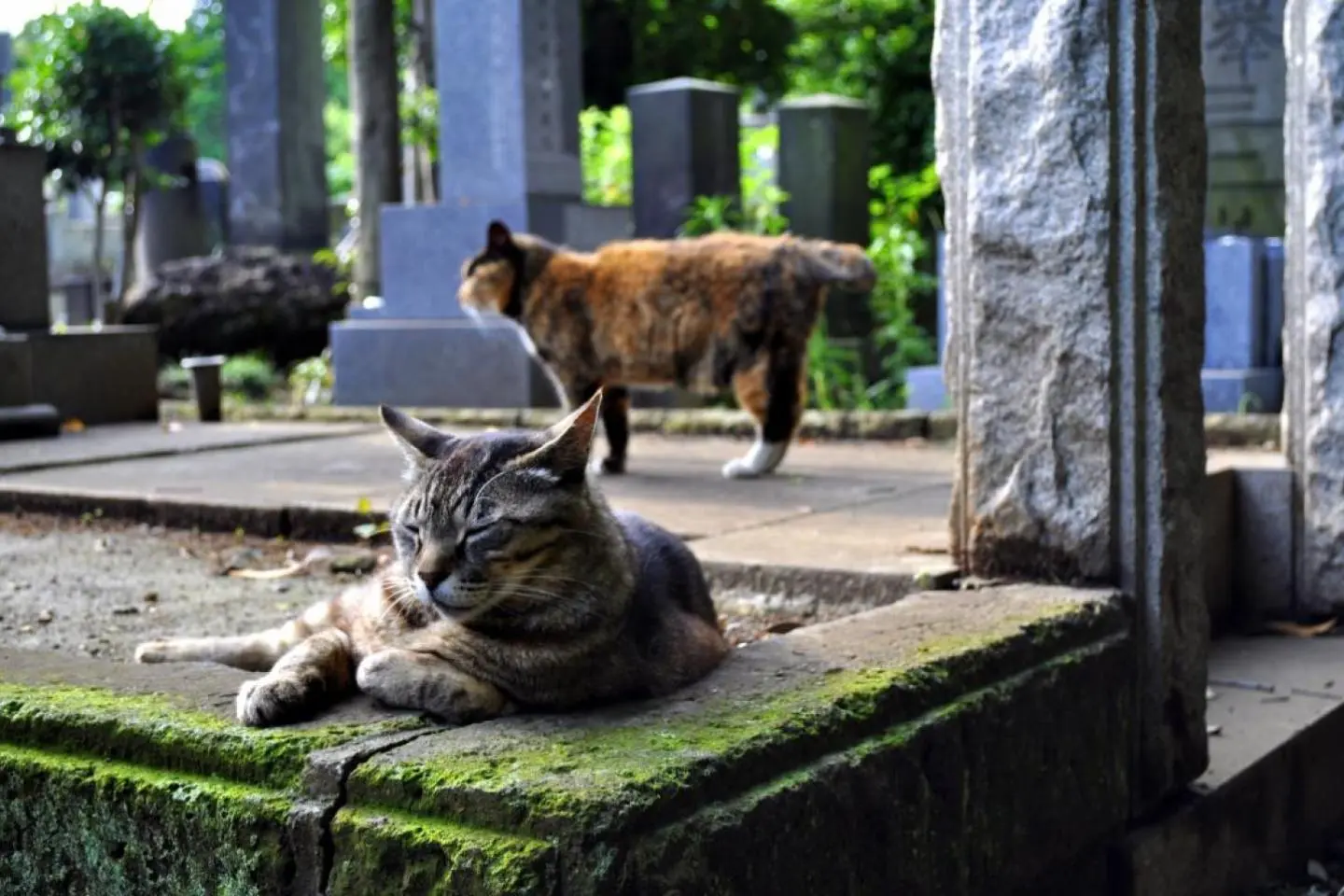
6. Cemeteries: Surprisingly Peaceful Homes for Cats
A cemetery might not be the first place you would choose for a cat café, but some cemeteries have become familiar homes for cats.
These locations can offer quiet surroundings, sheltered corners, mature trees, and relatively limited traffic compared with busy streets. In some places, caretakers or local volunteers also help look after resident cats.
One well-known example is Rome’s Largo di Torre Argentina, an archaeological area associated with the remains of ancient Roman temples. The site has also become famous for its cats, with volunteers historically involved in caring for them.
Although it is not a conventional cemetery, the combination of ancient ruins and resident cats captures the same unusual atmosphere: animals making homes among places filled with history.
In other cities, cats have also been associated with burial grounds and memorial gardens.
Their presence can bring comfort to visitors, although these spaces should remain peaceful and respectful. Cats need appropriate care, and people should avoid disturbing graves, wildlife, or the animals themselves.
There is something quietly charming about seeing a cat resting among old stonework and trees. While humans visit to remember the past, the cat seems perfectly content to enjoy the present.
Possibly because it has no interest in thinking about tomorrow’s to-do list.
7. The Tower of London, England: Cats With Royal Neighbors
The Tower of London is known for its dramatic history, royal prisoners, famous ravens, and centuries of political intrigue.
But throughout the history of this fortress, cats have also played an important, if less glamorous, role.
Like many historic buildings, the Tower needed protection against rodents. Cats were useful residents because they could help control mice and rats around food stores and working areas.
Over the centuries, cats became familiar companions in many British castles, country houses, and government buildings.
The Tower's most famous animal residents are undoubtedly its ravens, surrounded by legends and traditions. Cats, however, have their own advantages. They don't need special ceremonies, elaborate uniforms, or official titles to look important.
A cat sitting on a stone wall can achieve the same royal atmosphere with absolutely no effort.
Imagine a medieval cat strolling through the fortress, inspecting guards, and sleeping beside ancient stonework. It would probably be unimpressed by the entire history of the British monarchy.
Kings and queens come and go. The cat still expects dinner at exactly the same time.
Although visitors shouldn't assume that cats roam freely throughout the Tower today, historic fortresses and castles remain fascinating examples of how animals have shared human spaces for generations.
8. A Cat's Favorite Place Might Be Somewhere Completely Ridiculous
Not every unusual feline home needs a famous name or a tourist attraction.
Some cats choose warehouses, railway platforms, libraries, office buildings, abandoned structures, garden sheds, and quiet corners of busy cities.
Others settle into places that seem entirely unsuitable until you remember that cats have a very different definition of comfort.
A cardboard box in the middle of a living room? Excellent security.
A laundry basket full of clean clothes? Premium bedding.
A narrow shelf above a refrigerator? A private penthouse with questionable accessibility.
A parking garage? Apparently, a perfectly reasonable place to spend an afternoon.
Cats are adaptable animals, and their ability to use different environments is one reason they've lived alongside humans for thousands of years. They can take advantage of sheltered spaces, available food, and familiar surroundings, although outdoor and abandoned environments can expose them to traffic, disease, harsh weather, and other dangers.
So while a cat sleeping inside an ancient castle might look like a royal success story, a cat living in an unsafe building may need human assistance.
There's a difference between an unusual home and a safe home, even if both provide excellent opportunities for dramatic sleeping positions.
And if your cat has ever rejected an expensive bed in favor of an empty delivery box, don't take it personally.
You didn't buy the wrong bed.
You simply underestimated the architectural genius of cardboard.