 HBWEB GAME PORTAL
The Most Cat-Friendly Countries in the World
Some countries have beautiful beaches.
Some have incredible food.
Some have ancient temples, spectacular mountains, or cities that look like they belong in a movie.
And then there are countries where you can barely walk down the street without meeting a cat.
You turn a corner.
Cat.
You sit outside a café.
Another cat.
You visit an ancient ruin.
There is a cat sleeping on it.
You go to a little island in the middle of nowhere.
Congratulations. There are 200 cats waiting for you.
For cat lovers, these places are basically Disneyland—with whiskers.
But being “cat-friendly” isn't just about having lots of adorable cats wandering around. It can also mean a strong cat culture, animal-welfare protections, rescue organizations, cat-friendly communities, or simply a long-standing relationship between people and felines.
So which countries deserve a spot on the feline-friendly map?
Here are some of the world's most interesting destinations for people who believe a vacation is better when a cat unexpectedly walks into it.
🇯🇵 1. Japan: Where Cats Have Their Own Islands, Shrines and Lucky Charms

If cats had a travel bucket list, Japan would probably be at the top.
Japan doesn't just like cats.
Japan has built an entire cultural universe around them.
You've probably seen the maneki-neko, the famous beckoning cat figurine with one paw raised. In Japan, these lucky cats are traditionally associated with welcoming people, prosperity, or good fortune. The symbol is so deeply embedded in Japanese culture that you can find cat-themed streets, shops, artwork, souvenirs, and museums.
And then there are the cat islands.
Japan has more than ten islands known for their cat populations. On Tashirojima, cats historically helped protect silkworms from rodents, and today the island is famous for having far more cats than people.
There is also Aoshima, where the cat population has famously outnumbered the human population.
Basically, Japan looked at the idea of a cat sanctuary and thought:
“Why stop at one building? Let's give them an island.”
Japan is also home to cat cafés and plenty of feline-themed attractions.
Even better, cats have a genuine cultural presence here rather than being treated simply as tourist props. Japan's tourism board describes cats as deeply woven into local art, folklore, traditions, and everyday culture.
Cat-lover score: 🐱🐱🐱🐱🐱
Best for: cat culture, cat islands, maneki-neko, cat-themed travel and extremely photogenic feline encounters.
🇹🇷 2. Türkiye: The Country Where Cats Are Practically Local Celebrities
If Japan is the country where cats have their own islands, Türkiye—especially Istanbul—is the place where cats can feel like unofficial citizens.
Istanbul is famous for its street cats.
They sleep on shop counters.
They sit outside restaurants.
They wander around historic buildings.
They nap in gardens.
They pose for tourists.
And occasionally, they look at you as if you are the tourist who has wandered into their neighborhood.
The relationship between Istanbul's residents and its cats has deep historical roots. Cats have long lived alongside people in the city, and many residents feed and care for community cats.
The phenomenon became internationally famous through the documentary Kedi, which followed several Istanbul street cats and the humans who cared for them.
The result?
The cats became movie stars.
Not bad for animals whose primary professional skills include sleeping, eating and staring at strangers.
Türkiye's approach to cats is also interesting because many of the city's cats are not traditional household pets. They are community cats—animals that may have several people looking out for them.
In Istanbul, a cat doesn't necessarily need one owner.
It may have an entire neighborhood.
Cat-lover score: 🐱🐱🐱🐱🐱
Best for: street cats, historic neighborhoods, community cats and discovering that apparently every café has a feline manager.
🇬🇧 3. The United Kingdom: A Nation of Serious Cat People
The United Kingdom may not have cat islands or entire streets dedicated to lucky cats, but it has something equally powerful:
A huge population of people who genuinely treat cats like family.
According to the 2026 CATS Report from Cats Protection, the UK has around 11.7 million owned cats, with cats living in 27% of households. The report also found that 92% of cat owners consider their cat part of the family.
Ninety-two percent.
At that point, calling a cat “a pet” seems almost disrespectful.
The UK also has a long-established network of cat welfare organizations and rescue centers. Cats Protection, for example, operates a nationwide network helping cats through rehoming, neutering, welfare advice and other services.
British law also gives cats significant protection. Under animal-welfare legislation, owners have responsibilities to meet their cats' welfare needs, including appropriate food, environment, normal behavior and protection from pain and disease.
And then there's British cat culture.
Cat cafés.
Cat-themed books.
Cat charities.
Cat Instagram accounts.
Cat people who will happily spend ten minutes discussing the personality of a cat they met once in 2018.
Basically, Britain has turned cat ownership into a respectable national hobby.
Cat-lover score: 🐱🐱🐱🐱🐱
Best for: cat ownership, rescue organizations, welfare culture and people who can discuss their cat's personality for an unreasonable amount of time.
🇮🇹 4. Italy: Where Cats Have Been Hanging Around Ancient Ruins for Ages
 Italy has food.
Italy has art.
Italy has ancient Roman ruins.
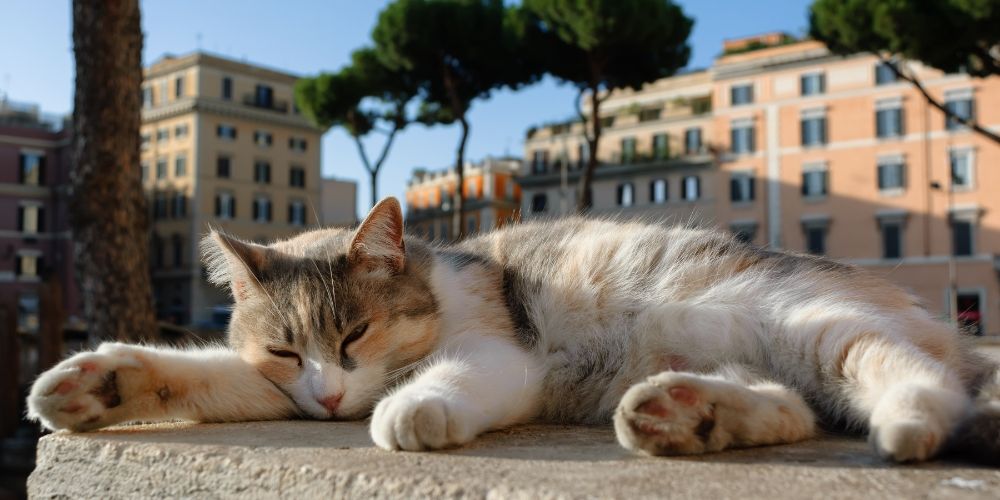
And, naturally, Italy has cats sitting on the ruins.
In Rome, one of the most famous examples is the cat colony around Largo di Torre Argentina, an archaeological site containing the remains of ancient Roman temples.
Thousands of years of history surround the cats.
Do the cats care?
Probably not.
They have a sunny stone platform.
That's all that matters.
Rome's community cats have become part of the city's visual identity, with volunteers and organizations caring for cats living around historic sites.
Italy also has strong legal protections against animal cruelty and abandonment. Italy's Ministry of Health notes that animal mistreatment and abandonment are criminal matters under Italian law.
The result is a particularly charming combination:
Ancient history + beautiful architecture + pasta + cats.
You might arrive in Rome hoping to see the Colosseum.
You may leave with 46 photos of a cat sitting beside a Roman column.
That's what we call cultural enrichment.
Cat-lover score: 🐱🐱🐱🐱½
Best for: street cats, ancient ruins, historic neighborhoods and photographs that accidentally contain more cats than monuments.
🇬🇷 5. Greece: Cats, Sunshine and the Mediterranean Lifestyle
If cats were allowed to design their own vacation destination, Greece might be suspiciously close to the final answer.
Warm weather.
Sunny stone walls.
Quiet courtyards.
Fishing villages.
Seaside restaurants.
And plenty of places to stretch out in the sun.
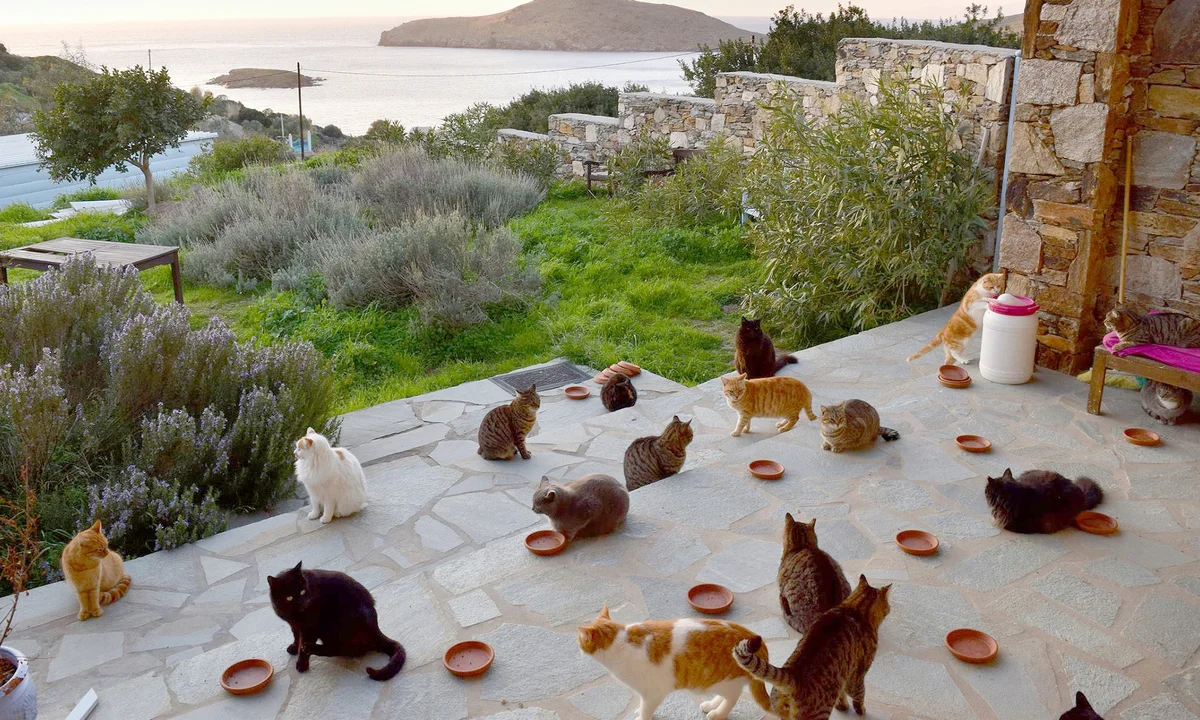
Cats are a familiar sight across many Greek cities, villages and islands. In tourist areas, visitors often encounter community cats around restaurants, harbors, churches and narrow streets.
The classic scene is almost too perfect:
A whitewashed Greek building.
A blue sea in the background.
A little fishing boat.
And a cat sitting directly in the middle of your photograph.
You move the camera.
The cat moves too.
Of course.
The cat has decided it belongs in the picture.
One important thing for travelers, however, is to remember that not every street cat wants human attention. Responsible cat tourism means observing rather than chasing, and following local guidance about feeding and interacting with animals.
Because being cat-friendly should mean respecting cats—not treating them like Instagram props.
Cat-lover score: 🐱🐱🐱🐱½
Best for: sunny street cats, Mediterranean villages, island adventures and accidentally photographing the same cat five times a day.
🇳🇱 6. The Netherlands: A Strong Animal-Welfare Culture
The Netherlands may not be the first country people think of when they hear “cat destination.”
But when it comes to animal welfare, it deserves attention.
The country's Animals Act is a major part of its animal-welfare framework and formally recognizes the intrinsic value of animals. World Animal Protection has described the Netherlands as a leading country for animal welfare in Europe.
And then there is Amsterdam.
Canals.
Bicycles.
Beautiful old houses.
And, naturally, cats.
The city even has attractions that celebrate feline culture, including cat cafés and the famous Catboat, a floating sanctuary for cats.
So while the Netherlands may not have thousands of cats casually taking over archaeological ruins, it has something different:
A culture where animal welfare is taken seriously.
And for a cat, having humans who respect your needs is arguably more important than having a statue of yourself.
Although a statue would still be nice.
🇫🇮 7. Finland: Quiet, Comfortable and Surprisingly Cat-Friendly
Finland isn't famous for street cats.
In fact, that's part of the point.
A country can be cat-friendly without having cats wandering around every historical monument.
Finland is known for strong living standards and animal-welfare awareness, while cats are kept primarily as companion animals rather than being famous urban street characters.
Interestingly, a 2026 study examining cat density and subjective well-being across 93 countries found a positive association between higher cat density and reported well-being—but the researchers emphasized that this was a correlation, not proof that cats cause happiness.
So we shouldn't conclude that adopting seven cats is the secret to national happiness.
But we can absolutely continue to suspect it.
For cats, Finland offers something quite different from Istanbul or Rome:
A quieter lifestyle.
Warm homes.
Responsible ownership.
And plenty of opportunities to spend the winter doing what cats already consider their primary occupation:
sleeping.
Cat-lover score: 🐱🐱🐱🐱
Best for: companion cats, calm environments and people who believe winter was invented specifically for blankets and naps.
The Golden Rule of Cat-Friendly Travel
There's one thing every cat-loving traveler should remember:
The goal isn't to collect cats. It's to respect them.
When you encounter a street cat, don't automatically assume it wants to be picked up.
Don't chase it for a photograph.
Don't feed it random food.
And don't disturb cats that are sleeping, eating or trying to get away.
Some cats will happily walk over and demand attention.
Others will look at you for half a second and disappear behind a wall.
Both are perfectly acceptable.
Because the ultimate sign of being a true cat person isn't getting every cat to love you.
It's understanding that the cat gets to decide.