 HBWEB GAME PORTAL
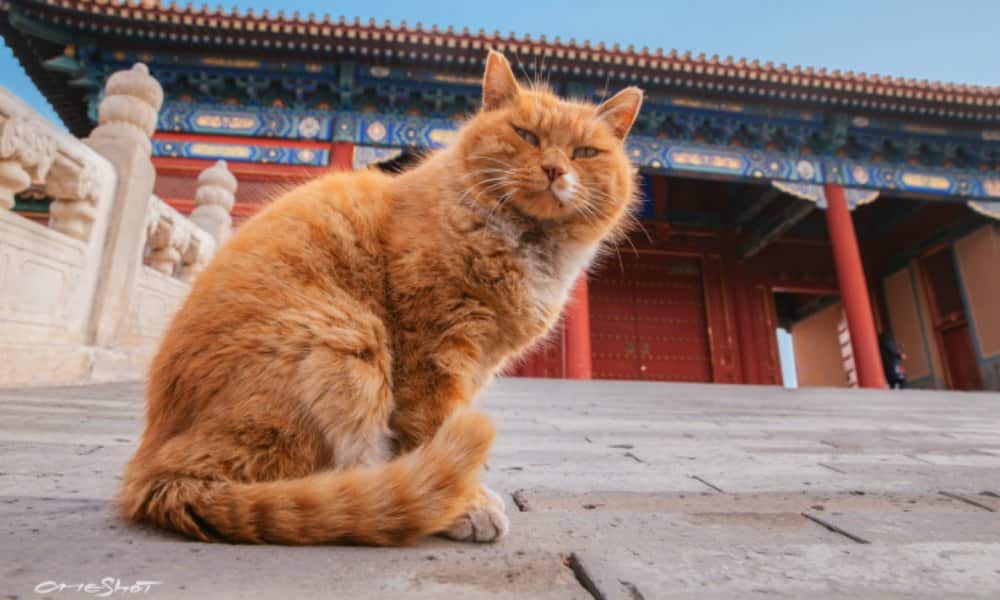
Some 200 of the cats roam the grounds of Beijing’s famous imperial palace, wandering through courtyards, lounging beneath ancient buildings, disappearing into quiet corners and generally behaving as if they have owned the place forever.
Technically, they don't.
But judging by the way they walk around, nobody has had the heart to tell them.
These aren't just random stray cats, either. Many have names and records, designated feeding areas, places to hide and rest, and even a daily food allowance.
Their job is also surprisingly important: helping keep mice away from the Forbidden City and its enormous collection of precious cultural treasures.
So yes, while humans come to admire 1.8 million priceless artifacts, a couple hundred cats are quietly making sure those artifacts don't become an all-you-can-eat buffet for rodents.
Welcome to the Forbidden City, where history is everywhere — and the cats are on security duty.
A Palace That Has Been Home to Cats for Centuries

The Forbidden City was the home and workplace of China's emperors for nearly 500 years, from 1420 until the end of the country's final imperial dynasty.
Today, the enormous palace complex is the Palace Museum, home to more than 1.8 million cultural artifacts.
It's one of the world's most famous historic sites, filled with magnificent halls, red walls, golden roofs and enough history to make your brain feel pleasantly overwhelmed.
But look beyond the grand architecture and you'll discover a completely different kind of resident.
Cats.
They slip between stone railings, cross ancient courtyards and nap in the shade as if they have an appointment with absolutely no one.
Visitors affectionately call them “imperial cats” or the palace's “four-legged guards.”
And honestly, “four-legged guards” sounds much more impressive than “cats who happen to live here.”
The Cats Have Royal Blood — Sort Of
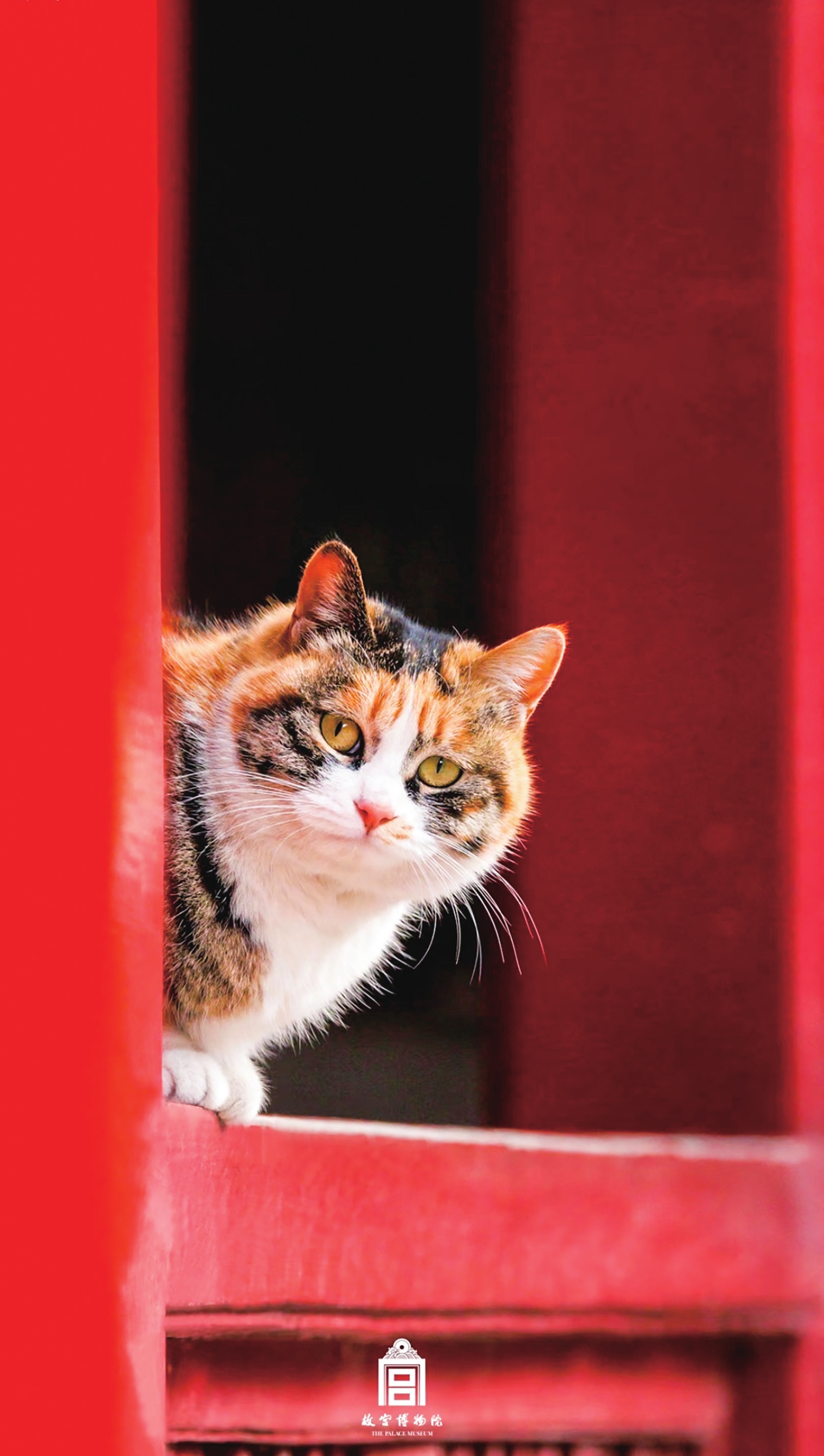
According to Global Times, Dan Jixiang, former director of the Palace Museum, once said that more than 200 cats live within the palace grounds.
Many are believed to be descendants of cats that lived in the imperial palace during the Ming and Qing dynasties.
Yes, you read that correctly.
Some of today's palace cats may be part of a feline family tree that goes back hundreds of years.
That's quite a pedigree.
Your cat might be descended from someone's neighborhood tabby.
These cats might be descended from actual palace cats.
Suddenly, “Your Majesty” doesn't seem so ridiculous.
But the cats weren't kept in the palace simply because ancient Chinese royals wanted something furry to cuddle.
They had a job.
From the Ming Dynasty onward, cats were kept to protect important documents, fabrics and other valuable belongings from mice.
In other words, the imperial court had a very simple solution to a very annoying problem:
Get cats.
And judging by the results, it worked.
Liu Zheng, a member of the Chinese Society for Cultural Heritage, said that keeping cats in the Forbidden City became an official practice during the Ming Dynasty.
Cats were also kept as companions by concubines and princesses, who lived in the enormous and highly secluded palace complex.
Some cats were even given names and titles.
Which means palace cats were not merely pets.
They were basically tiny aristocrats with whiskers.
Yes, the Palace Actually Kept Cat Records
Here's where things get wonderfully ridiculous.
According to CGTN, during the Ming Dynasty, the imperial palace had an institution responsible for registering and managing its cats.
During the Qing Dynasty, their names and origins continued to be recorded.
So somewhere in the history of imperial China, there were people whose job involved keeping track of cats.
Suddenly, the imperial bureaucracy sounds a lot more entertaining.
And this wasn't just some historical curiosity. The cats continued to serve a practical purpose.
Wang Xin, a veteran specialist in the Palace Museum's clock conservation and restoration department, began working there in 1977.
He remembered that in his early years, some ancient objects still showed signs of damage caused by mice.
But in more recent years, he said he no longer saw mice inside the museum grounds.
The cats, he believed, had helped.
So while humans were carefully restoring priceless clocks and artifacts, the cats were apparently handling another important conservation project:
Operation: Get Rid of the Mice.
No paperwork required.
Just paws.
What Do Palace Cats Get Paid?
Now we arrive at the most important question.
If these cats are working for the palace, what exactly is in their benefits package?
The answer is surprisingly good.
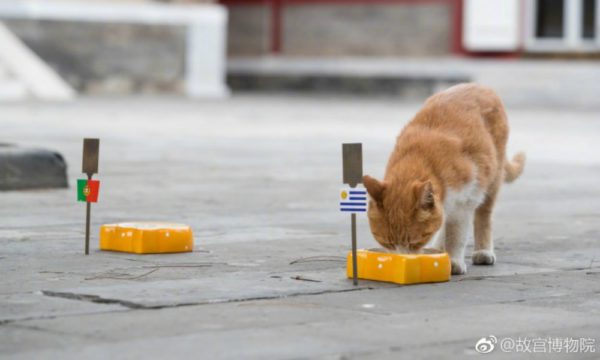
Today's imperial cats are registered and named by museum staff. They have designated feeding stations and receive cat food, sausages and other treats.
In other words, they don't get a salary.
They get snacks.
Honestly, that may be the most cat-appropriate payment system imaginable.
The feeding stations are placed in areas away from visitors, helping the cats get regular, reasonably balanced meals without interfering with the historic site.
The museum also provides quiet shelters where the cats can escape the crowds and take a break.
Because even a professional palace guard needs some alone time.
Staff clean the grounds regularly and carry out sterilization programs to prevent the population from growing too quickly.
When kittens are born, caregivers monitor them and help find suitable homes for those that need adoption.
So the palace has essentially created its own feline management system.
Recruitment.
Registration.
Housing.
Food allowance.
Healthcare.
Retirement planning...
Okay, maybe not retirement planning.
But give them another few centuries.
Want to Find a Palace Cat? There's a Map for That.
Here's something you probably won't find in a normal Forbidden City guidebook.
Cat hunting.
Cat lovers have created unofficial guides showing visitors where and when they might spot the palace's feline residents.
Apparently, around 3 p.m. is a particularly good time to see them near the feeding areas.
The Treasure Gallery, Jingren Palace and Shoukang Palace are among the places frequently mentioned on these unofficial “cat maps.”
Which means you could spend your morning admiring ancient architecture...
...and your afternoon crouching behind a pillar whispering:
“Where is the cat?”
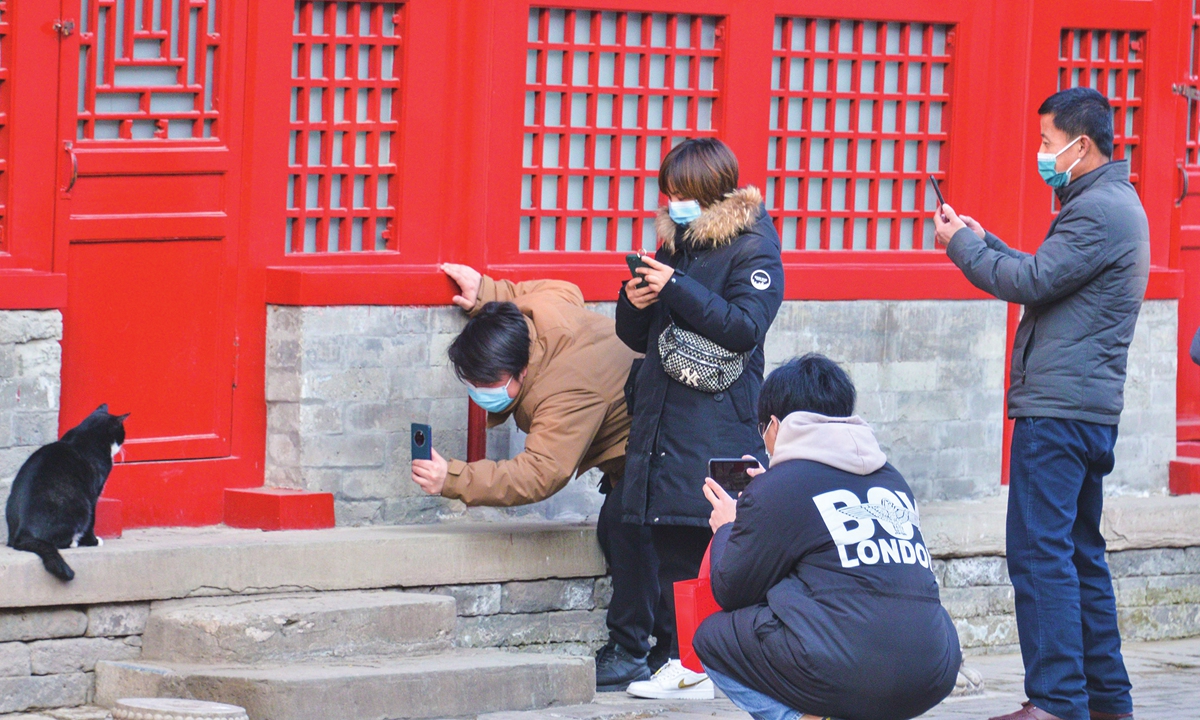
Some visitors are genuinely surprised when they see the animals.
They assume the cats belong to tourists or somehow wandered in from outside.
But nope.
They're residents.
You're the visitor. They're the locals.
Please behave accordingly.
The Cats Are Now Palace Celebrities
The cats may have started out as pest control, but they've since developed another important function:
Being ridiculously photogenic.
A cat sleeping on an ancient stone step.
A cat strolling across a brick courtyard.
A cat appearing dramatically behind a red palace column.
These moments have made the palace cats hugely popular with visitors and online audiences.
Some have even become celebrities.
The Forbidden City Has Changed. The Cats Haven't.
The emperors are gone.
The court officials are gone.
The palace is no longer a royal residence.
But the cats remain.
Around 200 of them still wander beneath the ancient golden roofs, quietly patrolling the grounds, taking naps, collecting their daily food allowance and occasionally becoming internet celebrities.
They may no longer be guarding an emperor's silk robes or royal documents, but their presence continues an unusual tradition that stretches back centuries.
And perhaps that's what makes them so charming.
The Forbidden City is usually presented as a monument to the past — a place filled with priceless artifacts, grand architecture and stories about emperors who lived hundreds of years ago.
But then a cat casually walks across the courtyard.
And suddenly, the past doesn't feel quite so distant.
The palace is still alive.
There are still residents walking its corridors.
They just happen to be furry, four-legged and completely uninterested in human history.
After all, you can build a palace for an emperor.
You can fill it with priceless treasures.
You can guard it for hundreds of years.
But sooner or later, a cat will move in and decide it's theirs.
And somehow, nobody ever wins that argument!