 HBWEB GAME PORTAL
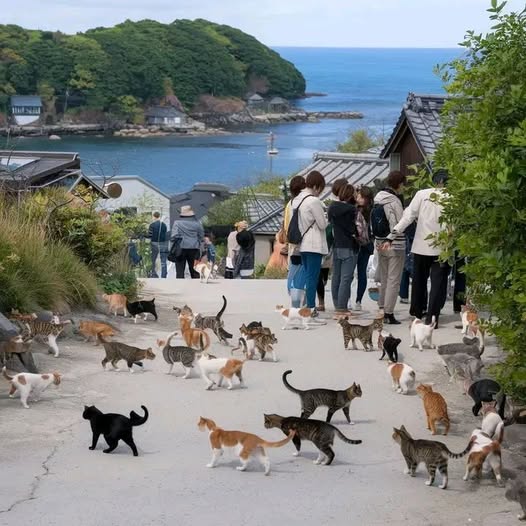
Imagine moving to an island where you wake up, walk outside, and immediately find yourself surrounded by cats.
Not one cat.
Not two cats.
Cats everywhere.
They are sitting on fishing boats, wandering through tiny streets, sleeping outside shops, staring at tourists, and occasionally looking at you as if they are wondering why you are visiting their island without bringing snacks.
Welcome to the world’s most famous cat islands—places where cats have become so numerous, so visible, or so deeply connected to local life that they have practically become the unofficial residents.
Some of these islands have only a few dozen human inhabitants. Others have become tourist attractions because of their unusually large cat populations. And in at least a few places, the cats seem to have reached the obvious conclusion:
Humans are useful. Keep them around.
So, where are these mysterious feline islands?
Let’s meet some of the most famous ones.
1. Aoshima, Japan: The Island Where Cats Rule the Roost
When people hear the words “cat island,” Aoshima is often the first place that comes to mind.
Located in Ehime Prefecture in southern Japan, Aoshima became famous for its unusually large population of cats compared with its tiny human population.
At one point, the island was home to hundreds of cats and only a small number of people.
That means the cats weren't exactly the minority.
They were the management.
The island originally had a practical reason for having cats around. Aoshima was a fishing community, and cats were useful for controlling mice and other rodents around fishing boats and homes.
Over time, the human population declined while the cat population grew.
And then the internet discovered the island.
Photos of dozens of cats gathering around visitors quickly spread around the world, turning this tiny fishing island into an international feline celebrity.
Today, Aoshima is still a real residential community—not a giant cat theme park. Visitors need to remember that the island is home to people as well as cats, and tourism is expected to be respectful.
But let's be honest.
The cats probably don't care about tourism etiquette.
They have important business to attend to.
Such as sitting in the middle of the road.
2. Tashirojima, Japan: The Island With a Cat Shrine
If Aoshima is famous for having lots of cats, Tashirojima takes things one step further.
This small island in Miyagi Prefecture is another Japanese island famous for its feline population.
Historically, Tashirojima was associated with silkworm production and fishing. Cats were valued because they helped control mice that could damage silkworms.
Fishermen also came to regard cats as lucky animals.
Over time, this relationship between humans and cats became part of the island's culture.
One of the most unusual sights is Neko-jinja, or Cat Shrine.
The story behind the shrine involves fishermen who cared deeply about cats. According to local tradition, an accident involving a cat led fishermen to build a shrine in its memory.
Today, the shrine stands as a symbol of the special relationship between the island and its cats.
And if you're a cat lover, Tashirojima has another surprise waiting for you.
There is even a cat-shaped accommodation area known as Manga Island, featuring cat-inspired cabins.
Because apparently regular vacation houses weren't feline enough.
Imagine telling your friends:
“I'm going to Japan.”
“Tokyo?”
“No.”
“Kyoto?”
“No.”
“Where?”
“I'm sleeping inside a giant cat.”
Fair enough.
3. Suwanosejima, Japan: A More Wild and Remote Cat Experience
Not every cat island is filled with tourists taking selfies with friendly cats.
Some are much more remote.
Suwanosejima, one of Japan's Tokara Islands, is a volcanic island with a tiny population and a much wilder atmosphere.
Cats can be found around rural communities and farms, but this is not the same type of cat tourism experience as Aoshima or Tashirojima.
And that's exactly what makes it interesting.
Instead of imagining a tropical island covered in carefully photographed cats waiting for tourists, picture something much more natural:
Volcanic landscapes.
Green hills.
Small communities.
And cats casually wandering around as if they have absolutely no idea that people on the other side of the planet are writing articles about them.
Honestly, that's probably the most cat-like attitude possible.
4. Lanai Cat Sanctuary, Hawaii: An Island Full of Rescue Cats
 Now let's leave Japan and travel to Hawaii.
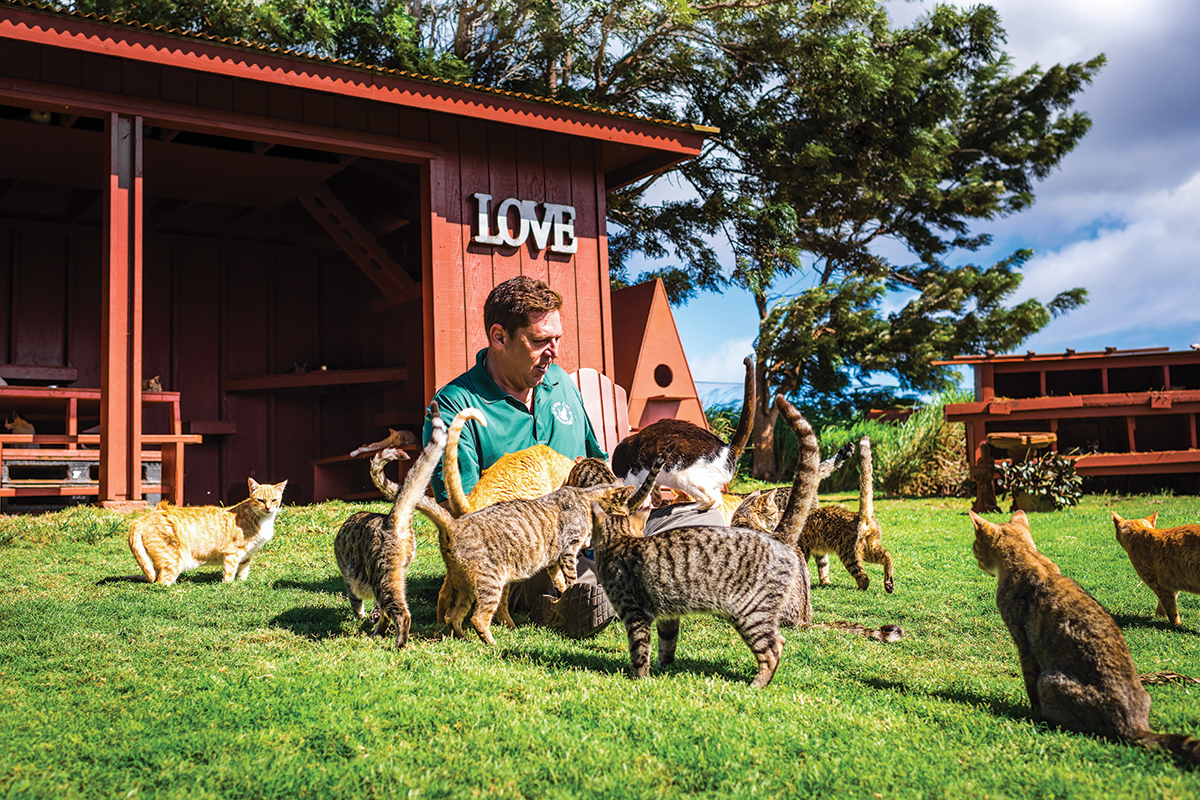
Lanai Cat Sanctuary is located on the Hawaiian island of Lanai, and this place takes the concept of a cat island in a very different direction.
Instead of simply being a traditional community where cats happen to live in large numbers, the sanctuary provides a safe environment for rescued cats.
The sanctuary is home to hundreds of cats, giving visitors an unusual opportunity to spend time with large numbers of friendly felines in an open setting.
And yes, this creates an extremely dangerous situation for cat lovers.
You arrive thinking:
“I'll just look around.”
Twenty minutes later:
“I have made 47 new friends.”
Another ten minutes later:
“I live here now.”
The sanctuary's mission is centered around caring for cats and helping them find homes where possible.
For visitors, the experience is less about chasing famous internet cats and more about meeting rescue animals in a protected environment.
It also highlights an important point about so-called “cat islands.”
A huge cat population isn't always a sign of paradise.
Responsible care, sterilization, veterinary treatment, food, and population management are essential if communities want cats and people to live together safely.
5. Isla Mujeres, Mexico: Not Exactly a Cat Island, But Definitely Cat-Friendly

Mexico's Isla Mujeres isn't technically a traditional “cat island” in the same way as Aoshima.
But if you're looking for places where cats are part of the local atmosphere, this Caribbean island deserves a mention.
Street cats can be seen around residential areas, restaurants, hotels, and quieter corners of the island.
And because Isla Mujeres is a popular tourist destination, cats have plenty of opportunities to discover one of their greatest natural talents:
Finding humans who might give them food.
Cats living around tourist areas often learn very quickly which humans are most likely to share a snack.
They don't need language skills.
They simply stare.
You surrender.
It's basically international diplomacy.
6. Greek Islands: Where Cats Became Part of the Scenery
The Greek islands may not have one single island officially known as “Cat Island,” but many visitors notice something immediately when they arrive:
There are cats everywhere.
From Santorini and Mykonos to smaller islands and coastal villages, cats have become a familiar part of Greek island life.
You'll often see them relaxing beside tavernas, wandering through narrow streets, sleeping in sunny corners, or appearing mysteriously whenever food arrives.
The classic Greek-island experience can therefore look something like this:
You find a beautiful whitewashed building.
You take a photo.
A cat walks into the frame.
You take another photo.
Another cat appears.
At this point, you stop trying to photograph the architecture.
The cat wins.
Many Greek communities and animal-welfare groups also care for local stray and community cats, providing food, veterinary assistance, and sterilization programs.
So although Greece doesn't have one famous “cat island” equivalent to Aoshima, its islands have developed a strong association with free-roaming cats.
7. Key West, Florida: The Island of the Six-Toed Cats
Now for something completely different.
Key West, in Florida, is famous for many things—but cat lovers may know it for one particularly unusual resident.
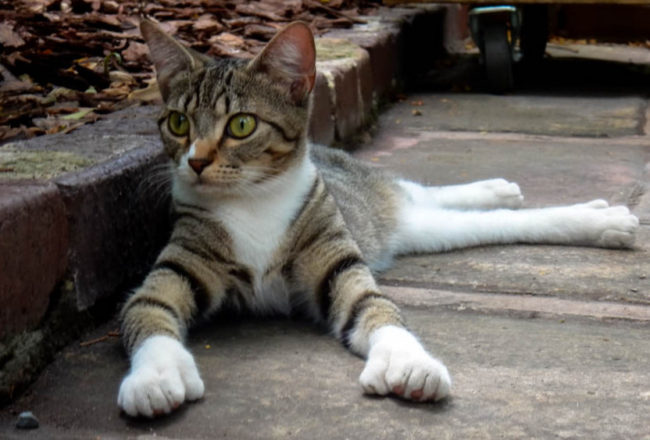
The island is associated with the famous six-toed cats of Ernest Hemingway's former home.
These cats are often polydactyl, meaning they are born with extra toes.
And yes, they are adorable.
They also have an excellent historical backstory.
Hemingway received a six-toed cat, reportedly named Snow White, and cats descended from that original cat continue to live around the property today.
Visitors to the Hemingway Home & Museum can encounter these unusual cats wandering around the grounds.
Some visitors probably arrive because they're interested in literature.
Then they see a six-toed cat.
Literature suddenly becomes optional.
The cats have effectively become celebrities in their own right.
8. The Island of Sylt, Germany: Cats With a Seaside Lifestyle
Not every famous cat destination needs thousands of cats.
Germany's North Sea island of Sylt has a very different kind of feline appeal.
Cats here are part of the island's quieter residential and holiday atmosphere.
Think sandy beaches, coastal homes, windy weather—and cats watching the world from windows as if they personally own the coastline.
Which, according to every cat I've ever met, is probably true.
Sylt is a good reminder that a “cat island” doesn't necessarily have to mean a place where cats dramatically outnumber humans.
Sometimes it's simply a destination where cats have become part of the local character.
Why Do Some Islands Have So Many Cats?
So why do cats seem to thrive on islands?
There isn't one universal answer.
In many island communities, cats originally arrived because humans brought them there.
For fishing communities, cats could help control rodents around boats, food supplies, homes, and warehouses.
In agricultural communities, they could help protect crops and stored food.
And once cats established themselves, they could reproduce and spread through the community.
Meanwhile, many islands have experienced declining human populations.
Young people move to larger cities.
Fishing industries change.
Traditional communities become smaller.
But cats don't necessarily leave.
So you can end up with an unusual situation:
Fewer humans. More cats.
And then the internet arrives.
Someone takes a photo.
The photo goes viral.
Tourists arrive.
More photos appear.
Suddenly, an island that barely appeared on the average travel map becomes famous for its furry residents.
Are Cat Islands Really Cat Paradise?
This is where things get a little more complicated.
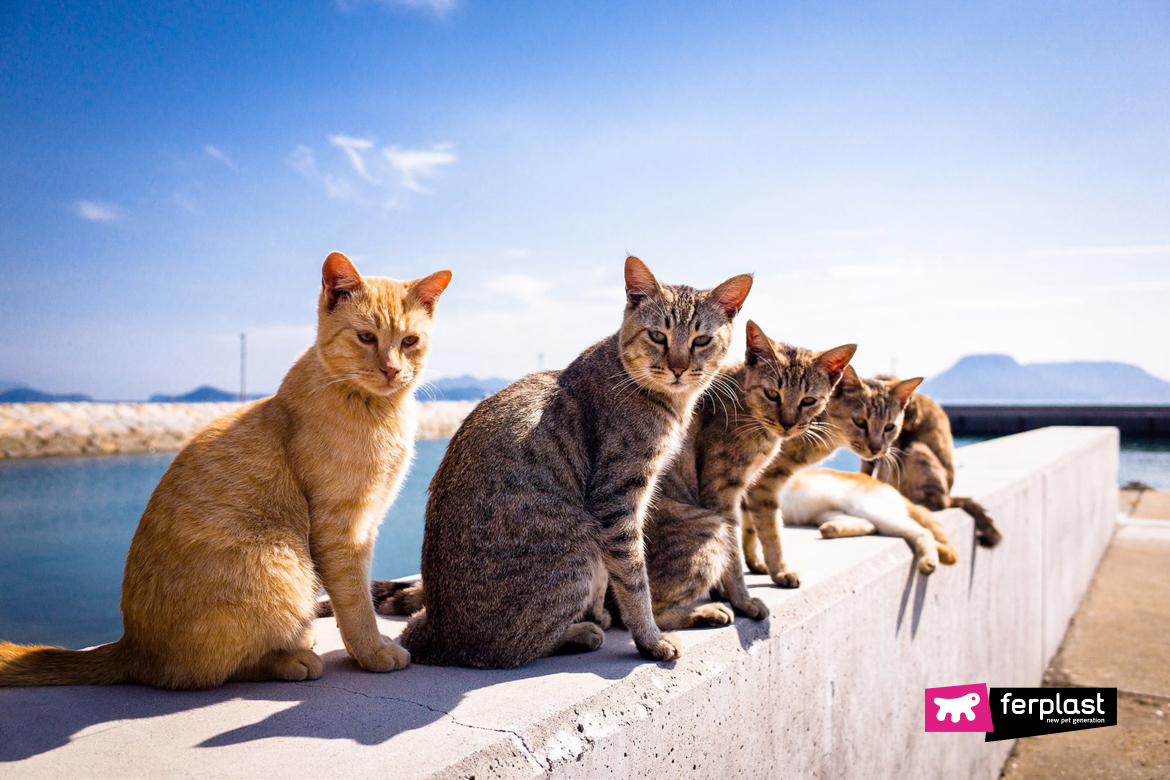
Pictures of dozens of adorable cats lounging in the sunshine can make cat islands look like paradise.
But life for free-roaming cats isn't always easy.
Cats living outdoors can face disease, injuries, parasites, traffic, fights, extreme weather, and competition for food.
An increasing number of communities therefore rely on animal-welfare organizations and local residents to provide food, veterinary care, and sterilization programs.
Responsible tourism matters too.
Visitors shouldn't assume that every cat wants to be picked up, fed, photographed, or followed around.
Some cats want attention.
Some want food.
Some want you to admire them from a respectful distance.
And some would like you to stop taking photos because they are clearly very busy doing absolutely nothing.