 HBWEB GAME PORTAL
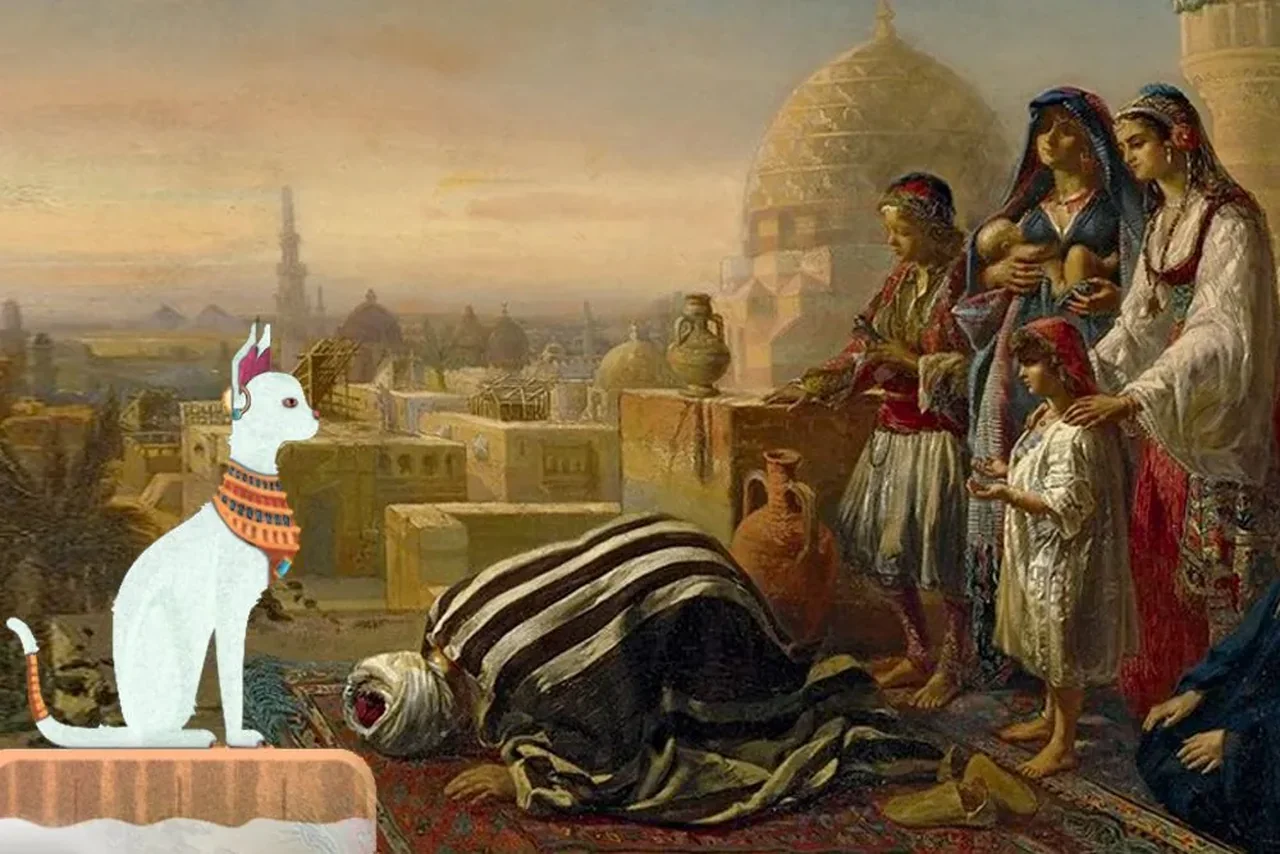
Imagine living in ancient Egypt. You work hard all day, the sun is blazing, and your house is full of important responsibilities. Then a small furry creature strolls into the room, knocks something over, ignores your existence, and falls asleep in the best spot in the house.
What do you do?
If you're a modern cat owner, you probably sigh, take a photo, and post it online.
If you're an ancient Egyptian, things might get a little more complicated. Your cat could be connected to the divine.
Thousands of years before cats became internet celebrities, ancient Egyptians held felines in remarkably high regard. They appeared in religious art, inspired statues and amulets, and were associated with powerful deities. Some cats were even mummified and buried as religious offerings.
So, why were cats so special? Was it their mysterious eyes? Their impressive ability to sleep through literally anything? Or had ancient Egyptians simply discovered the truth that every cat owner eventually learns: once a cat moves into your home, you are no longer entirely in charge?
The answer involves practical benefits, powerful religious beliefs, and one very famous feline goddess.
1. Cats Were Actually Useful Before They Became Divine
Let's start with something less mysterious than gods and goddesses: mice.
Ancient Egypt depended heavily on agriculture, particularly along the fertile Nile River. Grain was essential for feeding people and supporting society, but stored food attracted rodents. Mice and rats were hardly ideal houseguests, especially when they treated the food supply like an all-you-can-eat buffet.
Cats were natural hunters. Their ability to catch rodents made them useful around homes and grain stores. They could also help protect food from pests, giving people a very practical reason to welcome them nearby.
And unlike some human houseguests, cats didn't need to be asked to leave after dinner.
Over time, cats became more than convenient pest controllers. Archaeological evidence and ancient Egyptian artwork show that people formed close relationships with animals, including cats. Some were depicted alongside their owners in domestic and funerary scenes.
In other words, cats had a useful job, but they could also become companions.
This may sound familiar. Even today, people sometimes adopt a cat because they want a pet that can help keep pests away. A few months later, the cat has a heated bed, several toys, and a human who apologizes for being five minutes late with dinner.
History has a funny way of repeating itself.
2. Meet Bastet: The Goddess Who Made Cats Even More Impressive
 If ancient Egyptian cats had a celebrity manager, her name would probably be Bastet.
Bastet was an important Egyptian goddess associated with protection, the home, fertility, and well-being. She is especially famous for being represented as a woman with the head of a cat, although her imagery and associations developed over time.
Earlier forms of Bastet were more closely connected with a lioness. Later, she became widely associated with the domestic cat and was often portrayed as a graceful feline-headed woman.
Think of it as a divine rebrand: from formidable lioness energy to elegant cat goddess, without losing the power.
Bastet was particularly associated with protection. Cats themselves were admired for qualities that could appear contradictory: they could be gentle and affectionate, yet alert, independent, and formidable hunters when necessary.
Anyone who has watched a cat turn from a peaceful nap into an intense battle with a suspicious-looking shoelace will understand the combination.
Ancient Egyptians often connected the characteristics of animals with the qualities of their gods. The feline's ability to protect its young and react quickly to danger made it a fitting symbol for a protective deity.
Bastet was also associated with music, celebration, and aspects of domestic life in certain traditions. Her worship became particularly important at Bubastis, a city in the Nile Delta whose name was closely connected with the goddess.
Naturally, this gave cats a special religious significance.
To be clear, ancient Egyptians did not simply believe that every ordinary cat was literally a god walking around looking for lunch. Their religious beliefs were more complex than that. Cats were associated with Bastet, and feline imagery became an important way of expressing devotion to her.
Still, imagine trying to explain that to your cat.
"You are not actually a goddess."
Your cat stares at you.
You immediately reconsider your position.
3. Why Cats Seemed Almost Magical
Cats possess a talent for looking as though they know something the rest of us don't.
They can sit motionless in a dark corner, stare at an empty wall, and suddenly sprint across the room for no apparent reason. Their eyes reflect light, their hearing is excellent, and they can react to tiny movements that humans barely notice.
To people living thousands of years ago, many animal behaviours could carry religious meaning. Ancient Egyptians observed the natural world closely and often connected animals with divine qualities.
Cats could be protective but fierce, affectionate but independent. They were familiar household companions, yet their behaviour could seem mysterious.
Their association with Bastet helped give these qualities religious meaning.
But cats weren't the only feline figures in Egyptian religion. The lioness goddess Sekhmet, for example, was associated with power, warfare, and healing. Her fierce image contrasted with the more domestic associations commonly linked to Bastet.
Together, such deities demonstrate that ancient Egyptian religion did not treat all feline imagery as identical. Different animals and forms could represent different aspects of divine power.
So when we say the Egyptians worshipped cats, we're talking about a broader religious world in which feline creatures could represent protection, strength, and the forces that shaped human life.
And no, there is no historical evidence that ancient Egyptians worshipped cats because cats could predict earthquakes, read minds, or secretly control the weather.
Although, judging by the way some cats stare at their owners, I can understand why people might wonder.
4. Cats Received the Royal Treatment—But Not Every Cat Lived Like a King
Ancient Egyptian art provides evidence that cats could be valued members of the household.
In some tomb paintings, cats appear beside their owners, including in scenes associated with family life and hunting. Cat-shaped objects, statues, and amulets also became popular in different periods.
One remarkable example is the famous Gayer-Anderson Cat, a bronze figure from ancient Egypt now held by the British Museum. Its elegant posture and decorative details show just how sophisticated Egyptian representations of cats could be.
Some cat figures were decorated with jewellery or protective symbols. These were not merely cute ornaments. They could carry religious meaning and serve as offerings connected with devotion to Bastet.
But here's an important detail: we shouldn't imagine that every Egyptian cat enjoyed a life of luxury, complete with servants, a private courtyard, and unlimited fish.
Ancient Egypt was a large society that changed over thousands of years. People's circumstances varied, and the evidence does not suggest that every cat was treated in exactly the same way.
Some cats were household companions. Others may have lived more independently. Cats were also bred in large numbers during certain periods for religious purposes, including the production of animals intended for ceremonial burial.
So the ancient Egyptian cat experience probably ranged from beloved companion to religious offering—and not every feline had the same story.
Some things never change. Even today, one cat gets a custom-made climbing wall while another is perfectly happy living inside a cardboard box.
The box may actually be winning.
5. Cat Mummies: Because Ordinary Funerals Weren't Enough
Ancient Egypt is famous for mummification, but humans weren't the only beings whose bodies were preserved.
Cats were also mummified, and cat mummies have been found at important religious sites. Some were buried in cat-shaped coffins or placed in special burial areas associated with the worship of feline deities.
Why?
Mummification was connected with ancient Egyptian beliefs about death, the afterlife, and religious devotion. In some contexts, mummified animals served as offerings to gods. Cat mummies could therefore be part of a person's act of devotion to Bastet.
This practice became particularly prominent during later periods of ancient Egyptian history, when large numbers of animal mummies were produced.
It is worth remembering that animal mummies were not all identical. Some contained the remains of animals, while research has also identified examples in which the contents did not match what the wrapping appeared to promise. Ancient religious practices could involve complex systems of production, offerings, and burial.
In other words, the subject is fascinating, but it is not as simple as saying every Egyptian family mummified its pet cat.
Still, the image is extraordinary: a civilisation that created elaborate burial traditions also made room for cats within its religious world.
Imagine explaining this to someone who has never owned a cat.
"Yes, people cared so much about cats that they sometimes preserved them for religious purposes."
"And what did the cats do to deserve that?"
"Mostly, they caught mice, lived near people, and behaved like cats."
Honestly, that's a stronger career résumé than some of us have.
6. Did Ancient Egyptians Really Love Cats More Than Other Animals?
Cats certainly held an important place in ancient Egyptian culture, but they were not the only animals with religious significance.
Egyptian gods could be represented with the features of many creatures, including birds, crocodiles, jackals, and cattle. These animals were connected with different divine qualities and religious traditions.
Cats were special partly because they occupied several roles at once. They could be useful around homes and food stores, familiar companions, symbols of protection, and animals associated with a major goddess.
That combination helped make them especially prominent.
It also explains why cats appear in so many different forms of Egyptian material culture, from everyday scenes and jewellery to bronze statues and religious objects.
Their importance was not simply about people finding them cute. Their place in society connected practical experience with a worldview in which animals could express powerful religious ideas.
Of course, if you ask a modern cat owner why cats deserve special treatment, you'll probably get a different answer.
"Look at that little face."
Case closed.
7. What Ancient Egypt Can Teach Us About Cats Today
Thousands of years have passed, civilisations have risen and fallen, and humans have invented everything from electricity to automatic cat feeders.
Yet cats still manage to occupy a remarkably important place in our lives.
We buy them beds they refuse to use. We photograph them sleeping in positions that would make a yoga instructor nervous. We rearrange our schedules around feeding times and speak to them in voices we would never use in a business meeting.
Ancient Egyptians did not understand cats in exactly the same way we do today. Their relationship with felines was shaped by their own environment, beliefs, and religious traditions. But their artwork and surviving objects reveal that cats could inspire affection, admiration, and reverence long before social media existed.
Perhaps the most interesting lesson is that the human-cat relationship has never been based on usefulness alone.
Cats helped people manage pests, but they also became companions and powerful symbols. They were small animals with outsized cultural importance.
And perhaps that is why their story remains so fascinating.