 HBWEB GAME PORTAL
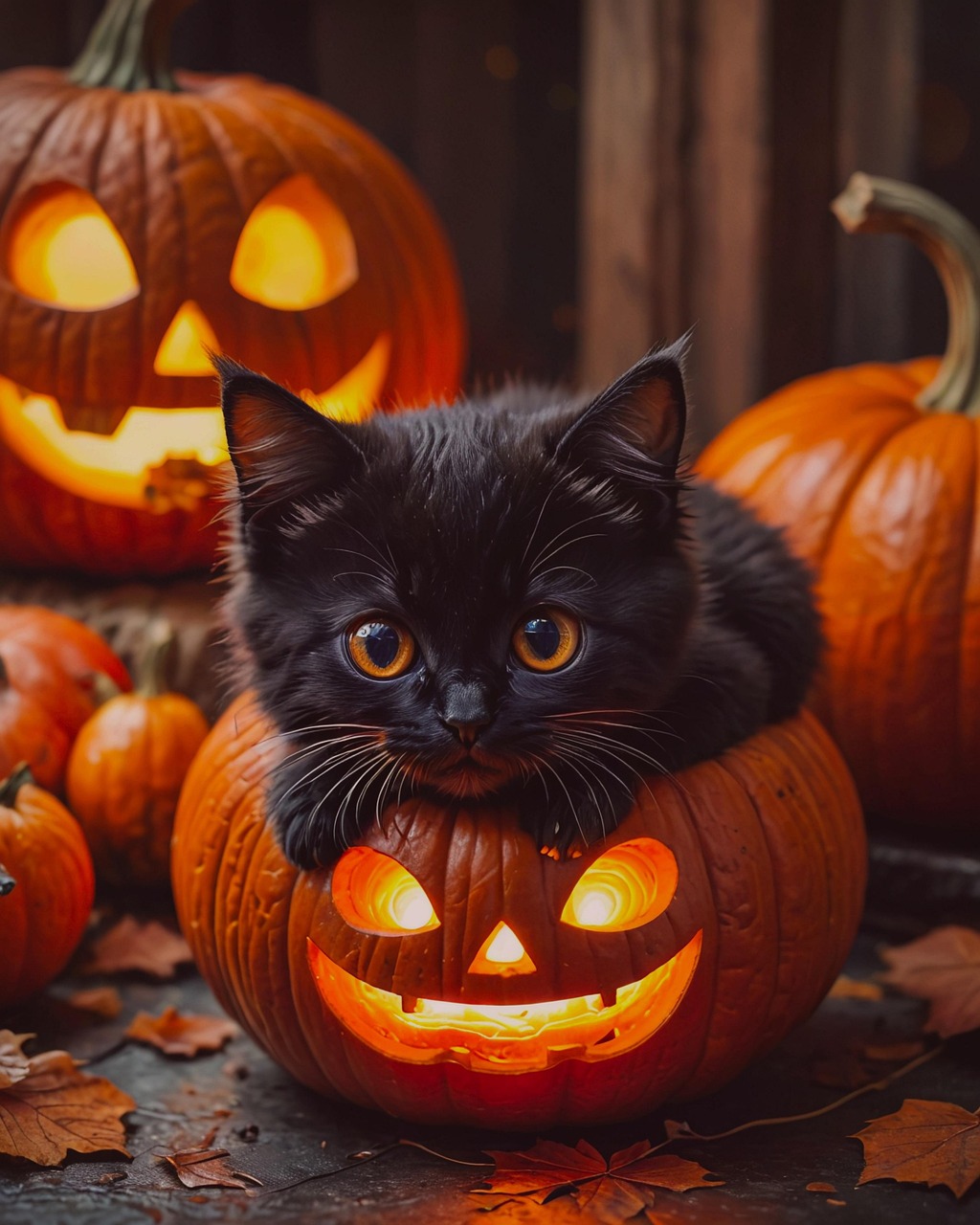
A black cat crosses the road.
You stop.
You turn around.
You consider taking a completely different route.
Meanwhile, the cat is probably thinking, “Why are you being weird? I’m literally just going somewhere.”
For centuries, black cats have been surrounded by superstition. In some cultures, they became symbols of bad luck, witches, darkness, and even death. In others, however, black cats were considered lucky, protective, or even worthy of worship.
So how did these mysterious-looking cats end up with such a terrible reputation?
Did black cats actually do anything wrong?
No.
Were they secretly plotting against humanity?
Also no.
They were mostly just… black cats.
The strange story behind their reputation has much more to do with religion, folklore, medieval fears, witches, and the human tendency to blame mysterious things when we don't understand them.
Let's find out how an innocent cat ended up with one of the worst PR campaigns in history.
First, Black Cats Weren't Always Considered Bad Luck
Here's the funny part: the idea that black cats are unlucky is not universal, and it wasn't always true.
In fact, cats have been respected, admired, and even associated with good fortune in different cultures throughout history.
Ancient Egyptians, for example, had a deep cultural and religious connection with cats. Feline deities such as Bastet were associated with protection, the home, fertility, and motherhood.
Cats could also be useful household animals because they hunted rodents and protected food stores.
So imagine being a cat in ancient Egypt.
You catch mice.
Humans appreciate you.
Artists paint you.
People make statues of you.
Life is going pretty well.
Then, thousands of years later, one particular color of cat somehow gets a reputation for causing bad luck.
That's quite a career decline.
The problem wasn't really the black fur.
It was what people gradually started associating with darkness itself.
Why Did Darkness Become Scary?
To understand the black cat's reputation, we have to understand something much bigger than cats: humans have always had complicated feelings about darkness.
Before electricity, nighttime was genuinely difficult.
Once the sun went down, visibility disappeared. Strange noises became harder to identify. Predators were more difficult to spot. Traveling at night could be dangerous.
And then there were cats.
Cats can move quietly.
They can see much better than humans in low light.
Their eyes can appear to glow when light hits them.
And a black cat can practically disappear into the darkness.
To a modern cat owner, that's just Tuesday.
To someone living centuries ago, however, a silent animal suddenly appearing out of the darkness could seem mysterious.
Add a few ghost stories, supernatural beliefs, and a healthy amount of human imagination, and you've got the beginning of a very unfortunate reputation.
The cat didn't change.
The storytelling did.
Then Came Medieval Europe
The black cat's association with bad luck became particularly strong in parts of medieval Europe.
During the Middle Ages, European societies developed many beliefs about magic, demons, witchcraft, and supernatural forces.
Cats sometimes became connected with these fears.
Why cats?
Partly because of their mysterious behavior.
Unlike dogs, cats don't always make their intentions obvious. They can stare at something invisible to you, disappear for hours, wander around at night, and suddenly appear beside you without making a sound.
Basically, cats were already behaving like cats.
Humans simply gave the behavior a supernatural explanation.
Black cats were especially vulnerable to this because their dark fur fit existing associations between blackness, night, mystery, and evil.
And once people began associating cats with supernatural forces, the rumors became increasingly dramatic.
Suddenly, a cat wasn't just sitting beside a fireplace.
It was watching.
It wasn't wandering through the village.
It was following someone.
It wasn't staring at the wall.
Obviously, it was communicating with the spirit world.
Or perhaps it had simply noticed a tiny bug.
Cats have been unfairly blamed for a lot of things.
The Witch Connection Made Everything Worse
This is where black cats really got into trouble.
During periods of European witch-hunting, cats were sometimes associated with witches and supernatural practices.
Stories and artwork helped reinforce the image of the witch accompanied by a mysterious black cat.
The idea became especially powerful in folklore: a witch might supposedly transform into an animal, or a cat might serve as a witch's familiar — a supernatural companion or helper.
Not every historical belief treated cats this way, and the details varied greatly between regions and periods.
But the association was powerful enough to survive.
Eventually, the image became almost impossible to separate:
Witch + pointy hat + broom + black cat.
Modern Halloween culture has practically turned the combination into a logo.
And black cats have been stuck with the branding ever since.
Imagine being a completely innocent cat and discovering that humans have spent centuries putting you in promotional material for Halloween.
No wonder cats look judgmental.
But What Exactly Is a “Familiar”?
The word familiar is important in the history of witchcraft folklore.
In European folklore and later witch-trial accounts, a familiar was believed to be a supernatural being that assisted a witch.
Animals were sometimes accused of being familiars, and cats appeared among the animals mentioned in these stories.
But here's the important distinction:
These were beliefs and accusations, not evidence that cats actually possessed supernatural powers.
Historical witch trials were complicated social and legal events, and accusations of witchcraft could have serious consequences for people — and sometimes for animals associated with those accusations.
Over time, popular culture simplified all of this.
The complicated history became:
Witch = black cat.
And then Halloween came along and made the whole thing even more visually memorable.
Poor cat.
It was just trying to find somewhere warm to sleep.
Why Do People Say a Black Cat Crossing Your Path Is Bad Luck?
This is probably the superstition most people know today.
A black cat crosses the road.
Someone immediately thinks:
“Oh no.”
But where exactly did this idea come from?
There isn't one single moment when someone officially declared:
“From today onward, black cats shall ruin everyone's day.”
The belief developed through different traditions and superstitions over time.
Black cats became associated with witches, nighttime, mystery, and the supernatural. In some European traditions, encountering certain animals or omens was interpreted as a warning.
Eventually, black cats became one of the animals commonly associated with bad luck.
But here's the problem with superstition:
If something bad happens after a black cat crosses your path, you remember it.
If absolutely nothing happens, you probably don't.
You continue with your day.
You don't tell your friends:
“Good news! A black cat crossed the road today and literally nothing happened.”
Nobody writes that story.
This is one reason superstitions can survive for generations. People naturally notice memorable coincidences and sometimes connect events that aren't actually related.
Meanwhile, the cat is completely unaware that it has just been blamed for your delayed train.
In Some Countries, Black Cats Are Actually Lucky
Here's where things get interesting.
The idea that black cats are unlucky is not shared everywhere.
In some cultures and traditions, black cats have been associated with good fortune or prosperity.
In Japan, for example, black cats can have positive associations. Black cat imagery can be connected with good luck, and black cats have also appeared in popular culture as symbols of protection or fortune.
In parts of Britain, black cats have historically been associated with good luck as well.
Some British and Irish traditions even treated a black cat appearing at your home as a positive sign.
So if a black cat walks across the road in one culture, someone might think:
“Bad luck!”
In another:
“Lucky!”
The cat, meanwhile:
“Where's dinner?”
Same cat.
Completely different interpretation.
That might be the best proof that the superstition says more about humans than it does about cats.
Sailors Had a Different Relationship With Black Cats
Cats have also had a long relationship with ships.
For centuries, sailors kept cats aboard vessels to control rats and mice that could damage food supplies, ropes, and other materials.
Because cats were useful shipmates, they sometimes became associated with good fortune and protection.
Different maritime traditions developed different beliefs about cats. Some sailors considered certain encounters with cats lucky, while others developed superstitions about what a cat's behavior might mean for a voyage.
And honestly, if you're trapped on a wooden ship in the middle of the ocean, having a cat nearby probably does feel a little magical.
The cat can hear things you can't.
It can detect movement.
It knows when something is crawling around before you do.
And it doesn't complain about seasickness.
Unlike the human crew.
A ship's cat was essentially a tiny, furry pest-control employee who worked for food and never attended a single meeting.
Some things about cats haven't changed.
The Black Cat's Reputation Got a Huge Boost From Halloween
Modern Halloween culture has helped cement the black cat's image as a symbol of mystery and spooky things.
Put a black cat next to a pumpkin, a haunted house, a witch, and a full moon, and suddenly you've got the complete Halloween starter pack.
Black cats became popular decorations, costumes, illustrations, and symbols.
And visually, it's easy to understand why.
A black cat has a striking silhouette.
Its eyes stand out against dark fur.
It looks mysterious without actually doing anything mysterious.
Basically, black cats have excellent Halloween aesthetics.
Unfortunately, this can also reinforce old stereotypes that connect them with evil or bad luck.
That's one reason many animal organizations and cat welfare groups have worked to challenge these myths and encourage people to judge cats as individuals rather than by superstition.
Because a cat shouldn't have to lose a home because someone thinks its fur color is unlucky.
Black Cats Have a Serious Adoption Problem
This is where an old superstition stops being funny.
In some places, black cats can be harder to photograph clearly, harder to make visually distinctive in online listings, or affected by lingering superstitions.
That can make finding them homes more difficult in certain shelters and communities.
However, it's important not to assume that every shelter experiences the same pattern. Adoption rates depend on many factors, including local culture, shelter practices, season, age, personality, and the number of animals available.
The bigger point is simple:
Fur color tells you almost nothing about a cat's personality.
A black cat can be playful.
A black cat can be shy.
A black cat can be ridiculously affectionate.
A black cat can be the kind of creature who wakes you at 4 a.m. because it has suddenly remembered that breakfast exists.
In other words, black cats are cats.
Their personalities are individual.
Their fur color doesn't determine whether they'll bring you happiness — or knock your favorite mug off the table.
Although, statistically speaking, that second possibility may apply to cats of every color.
Why Do Black Cats Look So Mysterious?
There's also a completely non-supernatural reason black cats can look unusually dramatic.
Their dark coats create strong contrast with their eyes, especially in photographs or low light.
And because black absorbs a lot of visible light, details in their facial features can sometimes be harder to see than on lighter-colored cats.
The result?
A black cat sitting silently in a doorway can look like the mysterious guardian of an ancient castle.
In reality, it's probably thinking:
“I wonder if there's food.”
This is one of the great differences between appearance and personality.
A black cat can look like it knows the secrets of the universe while simultaneously being terrified of a plastic bag.
Classic cat behavior.
So, Are Black Cats Actually Bad Luck?
Absolutely not.
There is no evidence that a cat's fur color can cause good luck, bad luck, accidents, financial problems, romantic disasters, or anything else supernatural.
A black cat crossing your path simply means a black cat crossed your path.
It might be going home.
It might be looking for food.
It might have spotted another cat.
It might be walking toward a completely mysterious destination known only to itself.
Or it might stop halfway across the road, sit down, and start grooming.
Because cats.
The superstition came from centuries of cultural beliefs, folklore, religious fears, associations with witchcraft, and stories about the supernatural.
The cat itself didn't sign up for any of it.
From Bad Luck to Beloved Pets
Interestingly, the image of the black cat has changed dramatically over time.
The same animal that once appeared in frightening folklore is now a beloved companion, internet star, Halloween icon, and favorite subject for photographers.
Black cats appear on mugs, T-shirts, books, jewelry, greeting cards, and endless memes.
Some even become famous online simply because they are particularly adorable.
The internet has basically given black cats a massive public-relations department.
And it may be working.
Today, many people see black cats not as omens of bad luck but as elegant, mysterious, affectionate animals with absolutely no interest in human superstition.
Which is probably healthier for everyone involved.
Especially the cat.