 HBWEB GAME PORTAL

Your cat may already have everything they need: a cozy bed, unlimited food, a personal staff member (you), and approximately 47 places to sleep.
So why stop there?
Maybe you're thinking about getting another pet. A dog? A rabbit? Some fish? Perhaps even another cat?
But before you bring home a new furry, feathery, or scaly roommate, there is one important question:
Will your cat accept them?
Cats can be surprisingly social, but they can also be extremely selective about their housemates. Some cats happily cuddle with other animals. Others see a new pet and immediately think, “Excuse me. Who authorized this?”
The good news is that cats can live successfully with several other types of pets—as long as you choose carefully and introduce them properly.
Here are 7 pets that may be able to share a home with your feline boss.
1. Another Cat 🐱

Let's start with the obvious choice.
If your cat needs a roommate, another cat can be one of the best options. Cats often enjoy having another feline around, especially if they are young, playful, or already used to living with other cats.
But don't make the mistake of assuming that all cats automatically become best friends.
Cats have personalities too.
One cat might be thinking, “Yay! A new friend!”
The other might be thinking, “Wonderful. Another creature competing for my favorite chair.”
Age, personality, energy level, and previous experiences all matter. A playful young cat may become frustrated living with a very quiet older cat, while two relaxed cats may happily coexist without causing much drama.
How to make it work
Don't simply open the carrier and announce, “Surprise! Here's your new brother.”
Instead, introduce them gradually. Let them get used to each other's smell before allowing direct interaction. Give each cat their own food bowls, litter boxes, beds, and hiding places.
And yes, your home may suddenly require twice as much cat furniture.
But let's be honest—you probably weren't using that spare chair anyway.
2. Dogs 🐶
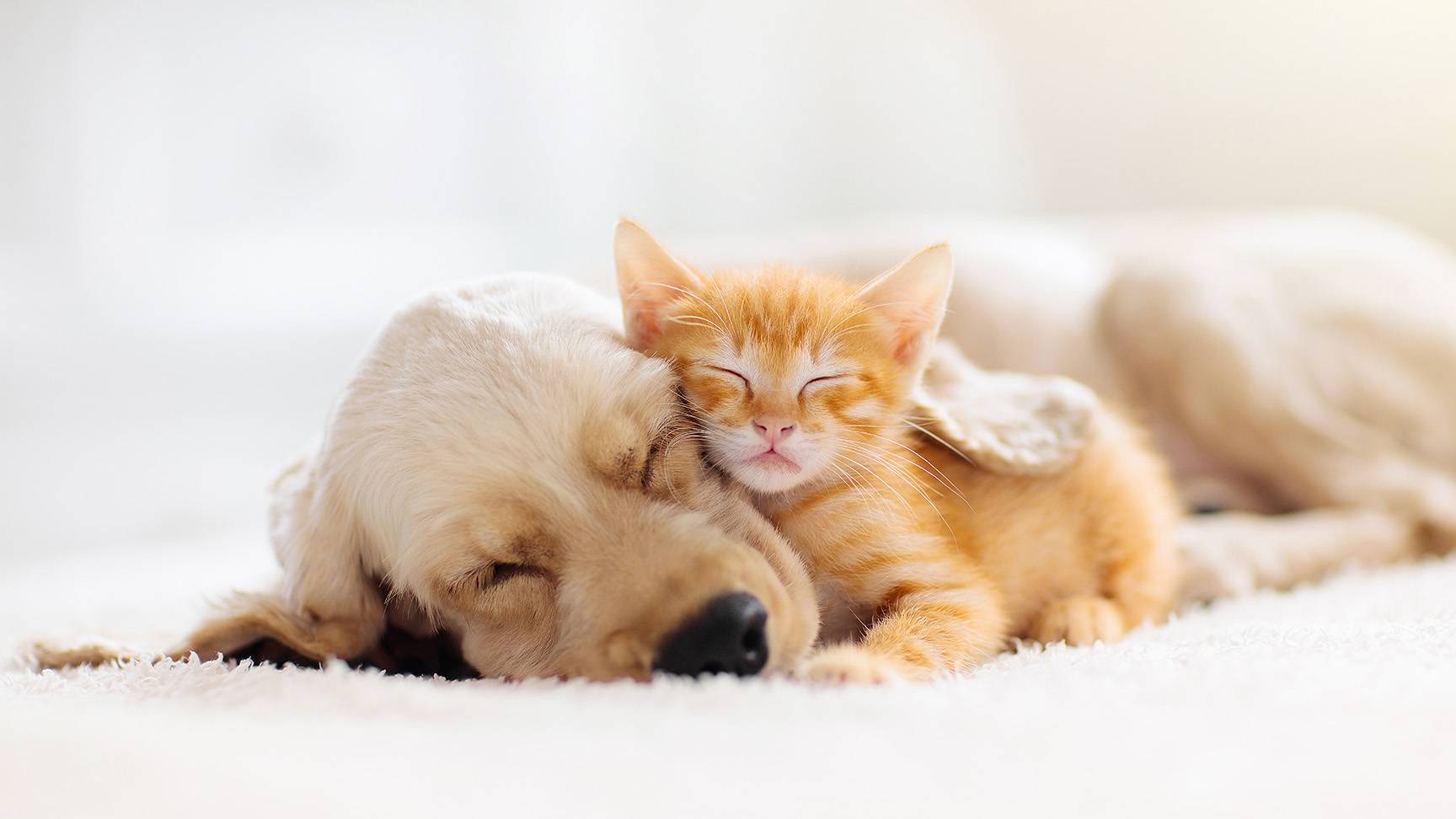
Despite centuries of internet memes, cats and dogs don't have to be sworn enemies.
In fact, plenty of cats and dogs become excellent companions.
The biggest factor isn't the dog's breed. Temperament matters much more.
A calm, gentle dog that respects boundaries may be a wonderful roommate for a cat. A very energetic dog that wants to chase anything that moves? That's a different story.
Your cat may not appreciate having a personal security guard sprinting after them every five minutes.
Look for a dog that:
- Is calm around smaller animals
- Doesn't constantly chase
- Can follow basic commands
- Respects the cat's space
- Has been socialized around cats or other animals
When introducing them, keep things slow and controlled. Give your cat plenty of high places and escape routes where the dog can't follow.
Because every cat deserves a VIP lounge.
And ideally, the dog should learn that “chasing the cat” is not a recreational activity.
3. Rabbits 🐰
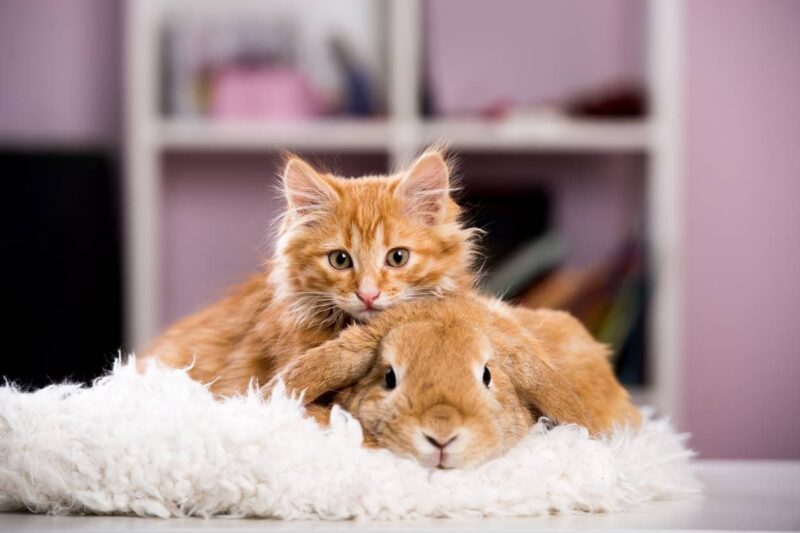
Rabbits can sometimes live peacefully with cats, but this pairing requires more caution than it may seem.
Rabbits are prey animals, while cats naturally have hunting instincts. Even a friendly cat may become fascinated by a rabbit's movements.
And a rabbit may not find being stared at by a 5-kilogram predator particularly relaxing.
Some cats and rabbits eventually become comfortable around each other. They may even nap near each other or develop a surprisingly sweet friendship.
However, they should be introduced gradually and never assumed to be safe together simply because they seem friendly at first.
Always supervise their interactions, especially in the beginning.
The goal is friendship—not turning your living room into The Great Bunny Escape.
4. Guinea Pigs 🐹
 Guinea pigs are adorable, social, and relatively easy to keep indoors, which makes them tempting companions for cat households.
But there is a catch.
To your cat, a guinea pig may look less like a roommate and more like a tiny, squeaky moving target.
Even a cat that has never shown aggressive behavior may still have a strong hunting instinct.
If you have both animals, keep the guinea pig in a sturdy enclosure that your cat cannot open, climb into, or knock over. Give the guinea pig a secure area where they can eat, sleep, and hide without being watched by their furry security inspector.
Because “the cat is only curious” isn't quite enough to guarantee safety.
Can they live in the same house?
Yes, potentially.
Should they have unlimited unsupervised access to each other?
Definitely not.
Sometimes peaceful coexistence means accepting that your pets don't actually need to share the same room.
5. Fish 🐟
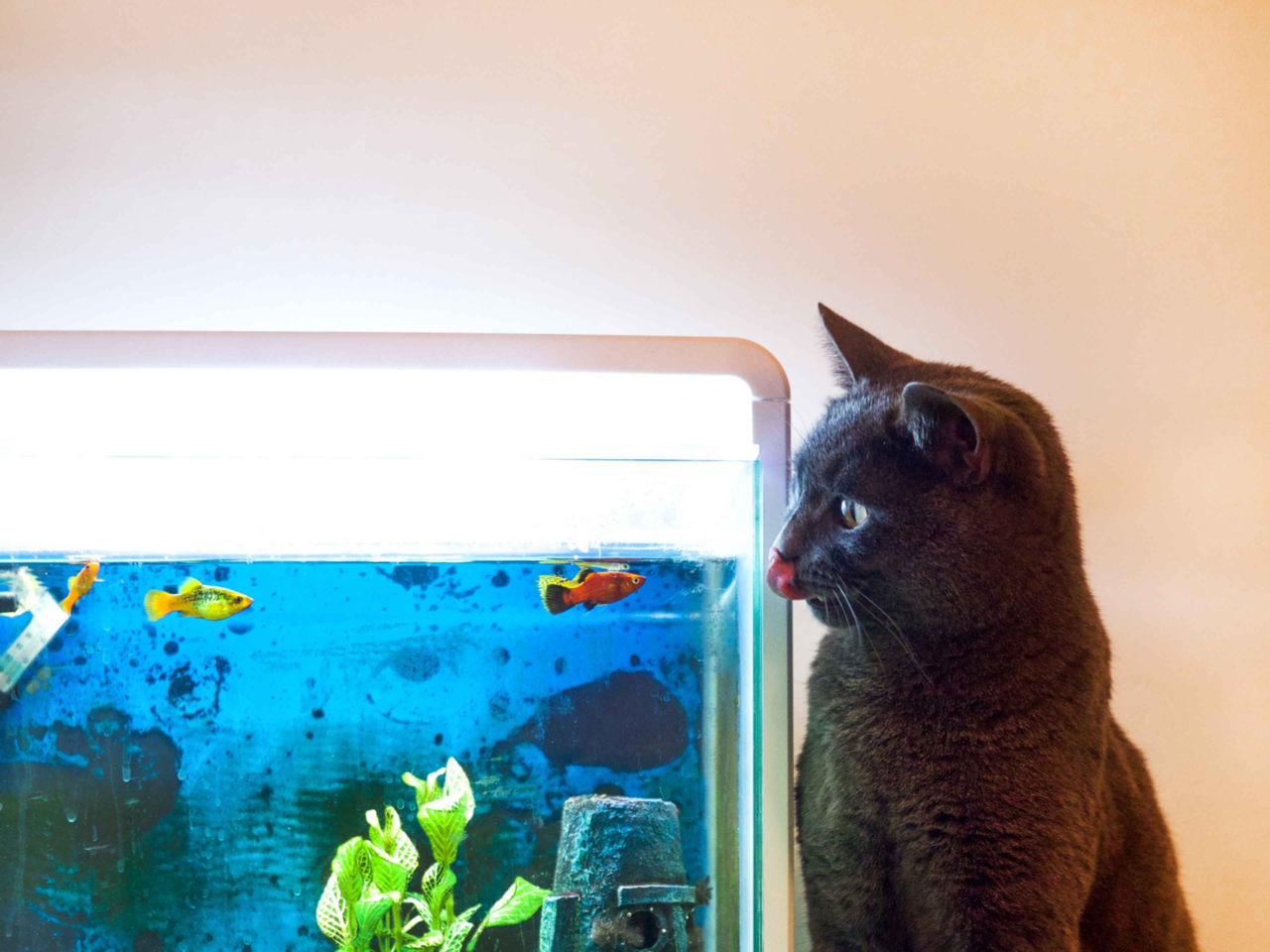 Fish might be one of the easiest pets to keep alongside a cat—as long as your aquarium is properly secured.
Cats are naturally fascinated by fish.
They move.
They sparkle.
They swim around mysteriously.
Obviously, your cat needs to investigate.
Your feline may spend hours sitting beside the aquarium like a tiny marine biologist conducting extremely serious research.
The main problem is when your cat decides to conduct the research with their paws.
Make sure the aquarium has a secure lid and sits somewhere stable. Avoid placing it where your cat can easily knock equipment over or jump onto the top.
And don't assume your cat will eventually lose interest.
Cats have an impressive ability to remain fascinated by the same moving object for approximately 900 years.
6. Turtles and Other Reptiles 🐢
 Depending on the species and setup, some reptiles can live in the same household as cats.
However, this doesn't necessarily mean they should roam freely together.
A cat may be curious about a turtle or reptile, while the reptile may become stressed by constant attention.
The safest arrangement is usually separate living spaces.
Keep the reptile's enclosure secure, make sure your cat can't open it or reach inside, and provide the reptile with the appropriate environment for its species.
This can actually work quite well because the two animals don't need to interact directly.
Your cat can simply sit nearby and judge the reptile from a safe distance.
Which, frankly, is very on-brand for cats.
7. Birds 🐦
 This one is complicated.
Birds and cats can sometimes live in the same home, but they require serious safety precautions.
Cats are predators, and birds are prey. Even a cat that seems completely relaxed around a bird can suddenly react to movement or sound.
For that reason, birds should always have a secure cage, and direct unsupervised contact should never be allowed.
If your bird is outside its cage, keep your cat safely separated.
Don't rely on your cat's usual personality.
Your sweet little angel who spends 23 hours a day sleeping may suddenly remember that they were born with hunting instincts.
So, can you have both?
Absolutely—but you need to manage the environment carefully.
Think of it as a roommate arrangement where the roommates don't actually get to share a bedroom.
Which Pets Should Never Be Left Alone With a Cat?
This is the most important part.
Even if two animals seem friendly, you should never assume they are automatically safe together.
Cats have hunting instincts, and smaller animals can be easily frightened or injured. A playful interaction for a cat may feel very different to a rabbit, bird, guinea pig, or hamster.
That's why small pets should have secure enclosures, and interactions between cats and other animals should be supervised unless you are completely certain that separation is maintained.
And remember:
“My cat has never done that before” is not a safety plan. 😹
How to Introduce a New Pet to Your Cat
If you've decided to expand your animal family, don't rush the introduction.
Your cat may need time to accept the idea that another creature is moving into their territory.
Start with scent
Before allowing direct contact, let the animals become familiar with each other's smell.
You can use separate bedding or allow them to smell items that carry the other animal's scent.
Basically, you're giving your cat the animal equivalent of reading someone's profile before agreeing to meet them.
Keep early meetings short
Start with short, controlled interactions and gradually increase the amount of time they spend near each other.
If either animal seems frightened or stressed, separate them and try again later.
There is no prize for introducing them in record time.
Your cat is not participating in the Olympics.
Watch their body language
Pay attention to signs of fear, stress, aggression, or excessive excitement.
A relaxed interaction is what you're looking for—not one animal desperately trying to escape while the other thinks it's playtime.
So, Which Pet Is the Best Roommate for Your Cat?
There isn't one universal answer.
Because at the end of the day, your cat may have very different ideas about what makes a good roommate.
You might bring home a beautiful new pet expecting instant friendship.
Your cat might look at you, look at the newcomer, and silently say:
“I already had a perfectly good human. Why did you do this?”
And honestly?
That's probably the most cat-like reaction possible. 😹
Final Thoughts
Cats can share their homes with many different animals, but successful pet friendships don't happen by magic.
Choose compatible personalities, introduce animals slowly, provide separate safe spaces, and always take their natural instincts into account.
And if your cat never becomes best friends with the new pet, that's okay too.
After all, in a cat household, everyone doesn't have to be best friends. They just need to agree on who gets the good spot on the sofa.